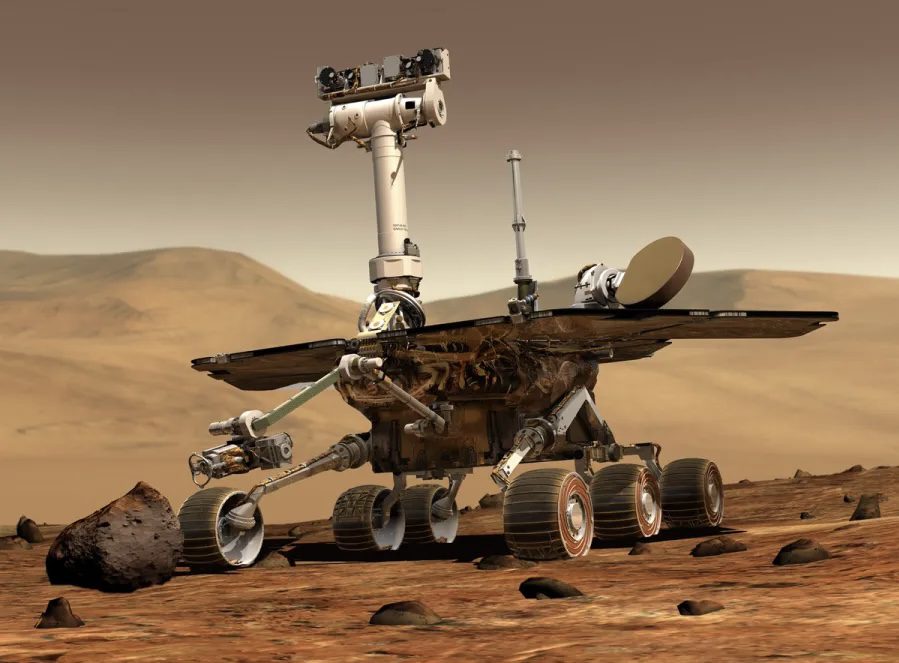

Spirit and Opportunity are identical twin robotic rovers that have gone far beyond their original scientific goals to rewrite the understanding of Mars’ early history. NASA has sent these two robotic “geologists” on a 90-day mission to look for geological clues to the environmental conditions on Mars and to assess whether these environments are conducive to life.
During their research trips, Spirit and Opportunity exceeded even the most optimistic expectations. The ten-year record of discoveries collected during the mission helped scientists reconstruct the past. Therefore, NASA’s project has fully justified itself and enabled scientists to know and understand more about the Red Planet. Find out the life story of Eugene Shoemaker, a geologist whose ashes are buried on the Moon. Read more at i-los-angeles.
Spacecraft MER
It was designed, built and tested at Jet Propulsion Laboratory in Pasadena, California. The main goal of the MER project was to deploy two mobile science laboratories on the surface of Mars to remotely conduct geological research, including characterizing rock and soil diversity.
The project aimed to make fundamentally new observations of the geology of Mars, including the first studies of rock samples, as well as detailed studies of surface environments to calibrate and validate orbital spectroscopic remote sensing. The project aimed to achieve these goals in a way that offered the public the wonder of space exploration.
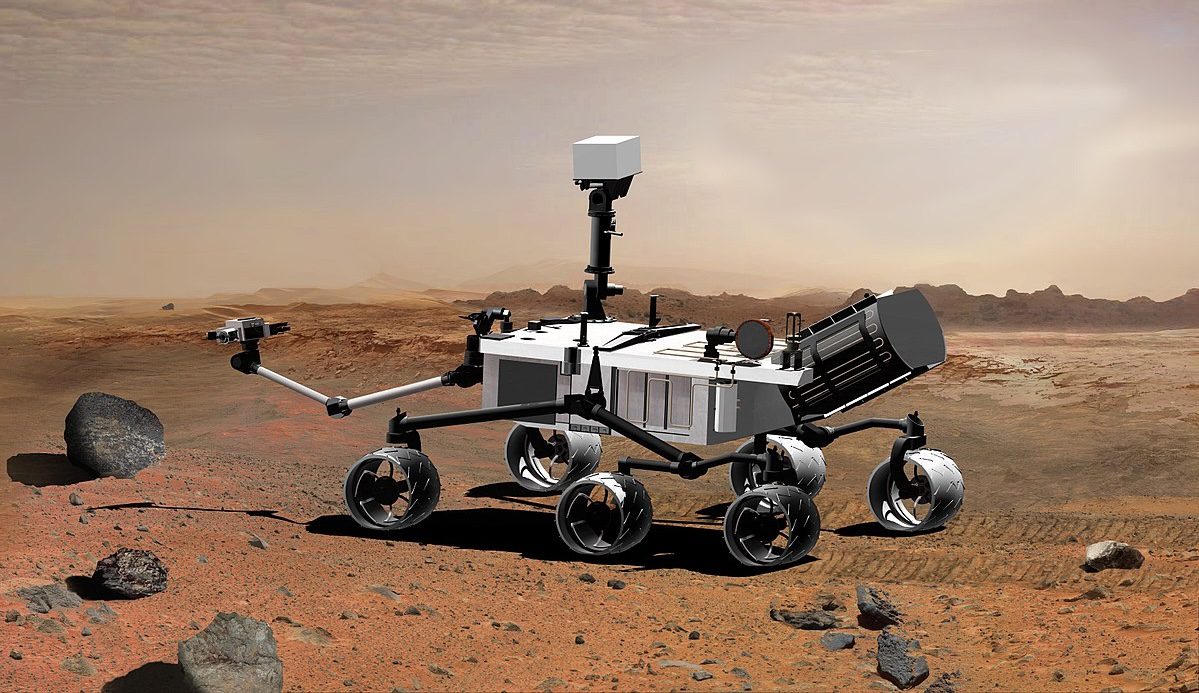
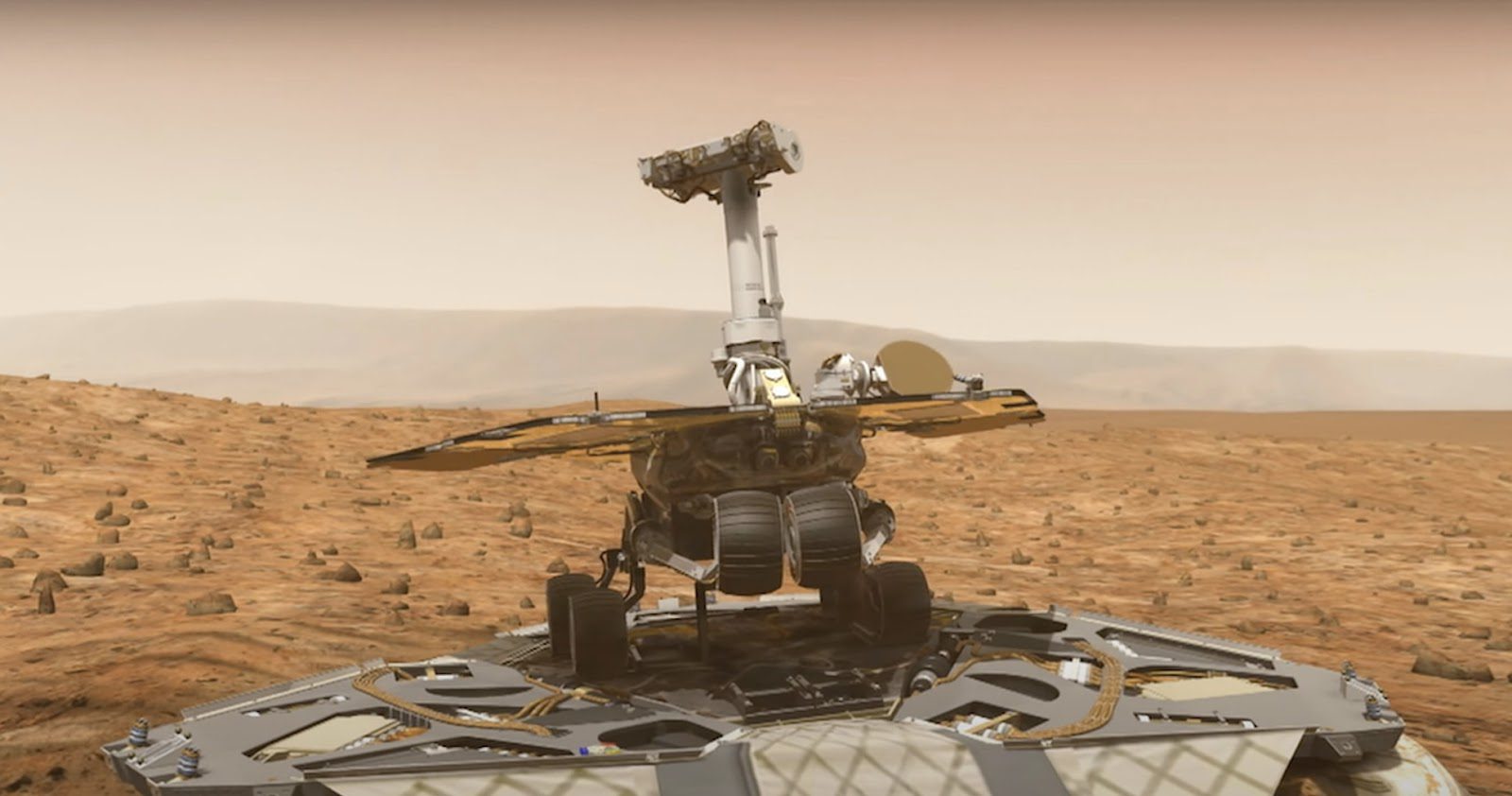
At the heart of the MER spacecraft is a rover. On its wheeled base, the rover is approx. 1.4 meters long and 1.2 meters wide. On its solar panel, the rover is 1.8 meters wide and 1.7 meters long. In its deployed configuration, the rover is just over 1.5 meters high and has a ground clearance of at least 0.3 meters. The rover’s body and primary structure, the warm electronics box, is an exoskeleton of composite honeycomb lined with aerogel for insulation.
The MER spacecraft is based on a proven design first flown on Deep Space 1 in 1998. But its phase modulator has been improved to be more linear. The SDST consists of four slices (boards): the power converter module, the digital processor module (where the signal is processed), the downconverter module (where the analog part of the phase-locked receiver loop is located) and the exciter module (where telemetry, range, or DOR is modulated to the RF communication carrier).
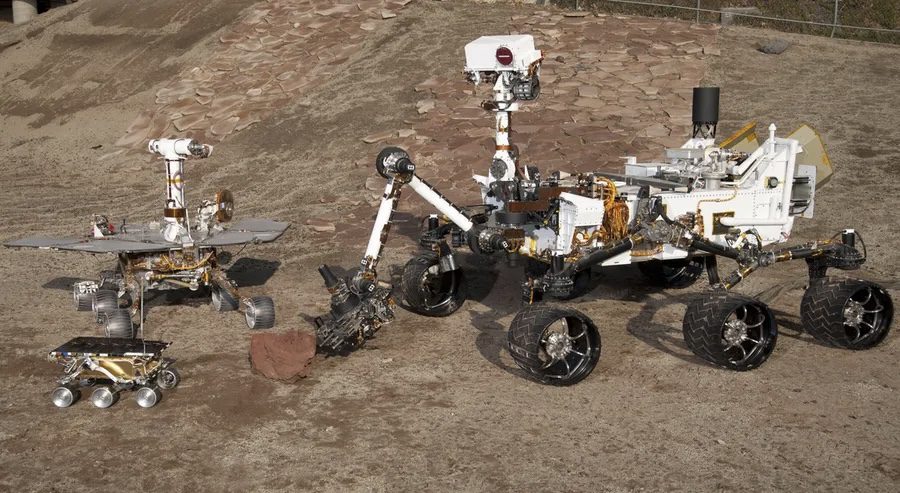
Each spacecraft contained a rover hidden inside the lander. For the journey from Earth to Mars, engineers packed the lander inside a heat shield and rear shell attached to a cruise stage. Upon arrival, with the spacecraft’s speed still increasing from Mars’ gravity, the entry capsule ejected from the cruise stage. A supersonic parachute inflated in the thin Martian atmosphere is needed to slow the lander down.
Near the ground, solid rocket engines kicked in to reduce the landing speed. Airbags inflated around the lander to cushion the impact. The lander bounced back and came to a stop on the Red Planet. As soon as the airbags deflated, the lander’s “petals” opened, revealing that the rover was ready to raise its “head,” stand up and roll away for its adventures on Mars.
Mars Exploration Rover mission
Spirit and Opportunity are identical twin robotic rovers. NASA has sent these two robotic “geologists” on a 90-day mission to search for geological clues to the environmental conditions on the Red Planet. The mission team picked two landing spots, Gusev Crater and Meridiani Planum, because of the high probability that liquid water, vital to life, was formerly there.
Spirit was launched on June 10, 2003 and landed in Gusev Crater on January 4, 2004. Opportunity was launched on July 7, 2003 and landed on January 25, 2004.
The California Institute of Technology manages the mission on one half of NASA’s Science Mission Directorate. Other NASA Center partners include Ames Research Center, Langley Research Center, Glenn Research Center and Kennedy Space Center. Science payload partners include Cornell University, Arizona State University and the U.S. Geological Survey.
The main missions for the Spirit and Opportunity rovers ended as planned in April 2004. As of the end of 2010, each rover has accumulated more than 5 years of ground operations. They have the capabilities to control, collect and transmit scientific data back to Earth.
Work on Mars
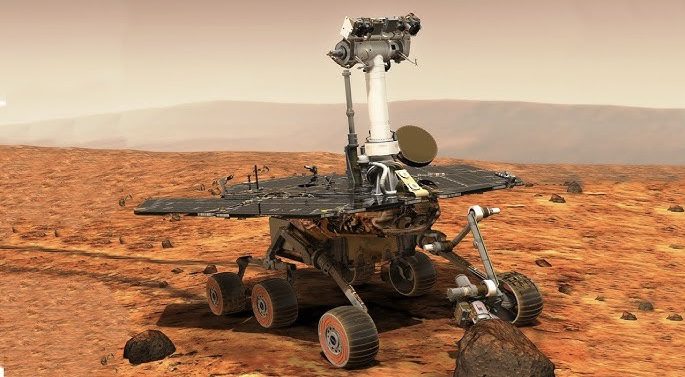
Around the rim of Victoria Crater, the rover discovered numerous hematite spheres, which were probably produced in water. Scientists speculate that the shock that formed the crater blew them to the top from subterranean levels. From this discovery, investigators suspect that water once flooded a layer buried below the surface to create the spherical nodules. The latter were then blown apart by the crash. The rover spotted a clump of minute rocks on the border of Victoria Crater that were verified to be meteorites, potentially associated with the shock that brought about the crater.
The rover picked up traces of water in the crater’s layers. Opportunity probed a series of strata lying in sequence around Victoria Crater. To leave Victoria Crater, worried rover engineers steered Opportunity to reverse the known course it had taken to ensure rover mobility.
Spirit and Opportunity impressed their science team by accumulating meteorites from the surface of the Red Planet. Meteorites are remnants of the original material that came together to form planets. Spirit’s and Opportunity’s findings are the first space rocks ever found on another planet. Compared to Earth, Mars has conditions for storing meteorites. The thin atmosphere of Mars produces less friction and heat. The meteorites on the Red Planet are undamaged compared to meteorites found on Earth, which are worn down by oxygen and moisture.
Science impact of rover work
The campaign was one of the first attempts to determine the feasibility of life on Mars and whether the Martian environment could ever support it. Tests of rocks and soils at various places surveyed by the rovers detect modifications in the rocks that could only be induced by extended contact with water.
They ran into soils and rocks with exceptionally rich levels of matter that would normally be contained in either hot springs or volcanic vents. These elements may have been suitable for microbial life. Opportunity has discovered that more chemically neutral, “drinkable” water was once preserved on the Red Planet before the acidic period in the ancient past, thus creating more favorable conditions for microbial life.
The insights from the Mars rovers have yielded a major push in underpinning the notion that Mars once had lifelike features. The rovers have been instrumental in delineating much of what Mars was like when liquid water was on the planet.