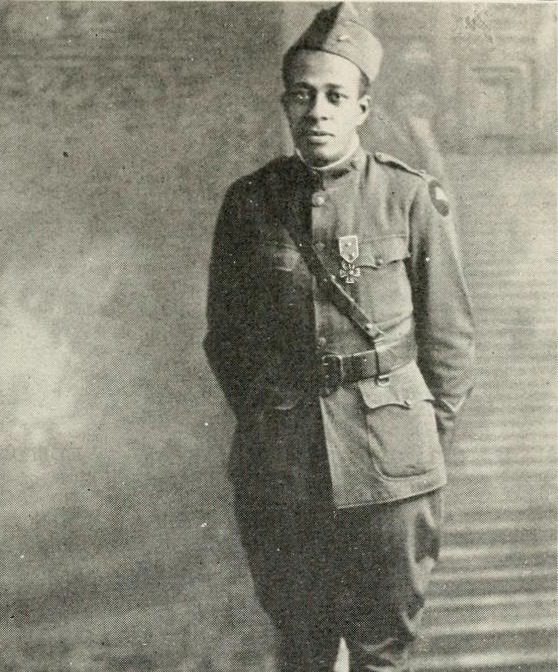

The history of American medicine holds many names of those who proved by their example: a true doctor knows no fear in the face of danger. One such individual was Dr. Claudius Ballard—a physician, scientist, and military medic who endured the horrors of World War I, saving the lives of others even when wounded. His name is inextricably linked to the history of Los Angeles, California’s African-American community, and the professional organizations and educational initiatives he actively supported. He published scientific papers and lectured young doctors, cementing his influence on the region’s medical education. Find out more at i-los-angeles.
Biography
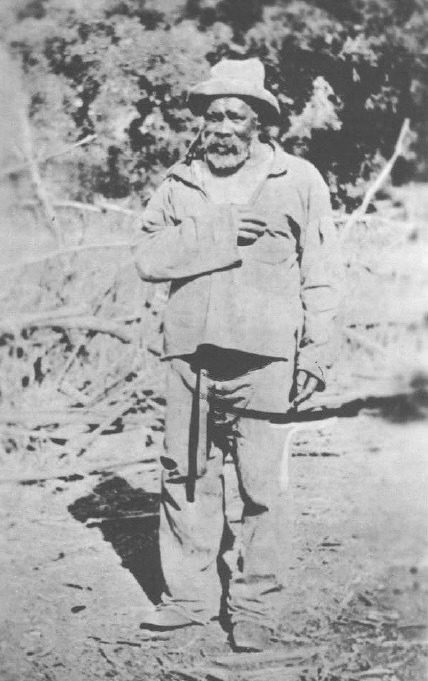
Claudius Ballard was born on June 14, 1890, to William L. Ballard and Mary Esther Tibbs. His lineage was deeply rooted in the fight for freedom: his grandfather, John Ballard, a former slave from Kentucky, settled with his family near the Santa Monica Mountains in the 1850s after being freed. He became one of the founders of the local African-American community and an initiator in establishing the region’s first African Methodist Episcopal (AME) Church. The Ballard family gradually grew into an influential community, purchasing land and organizing institutions for California’s Black population. However, Claudius himself rarely spoke of his origins—his goal was to achieve success in the world of medicine through his own knowledge and hard work.
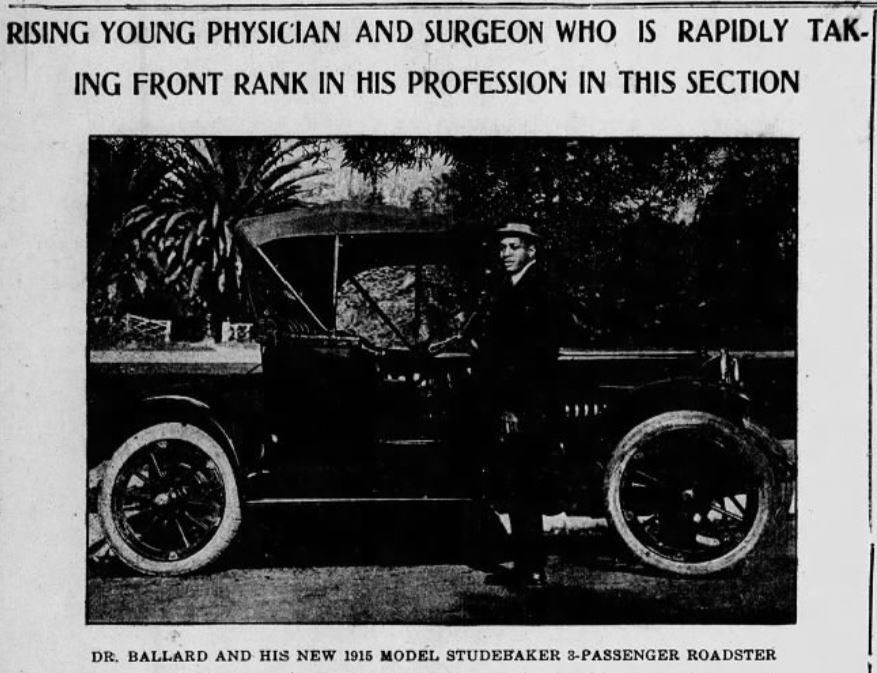
Ballard graduated from Los Angeles High School and later enrolled at the University of Southern California. He completed his medical education at the University of California, Berkeley, in 1913. By age 24, he had his own practice on Central Avenue in Los Angeles. Claudius immediately proved himself to be a physician-researcher. Even before the war, he published several papers in medical journals. Among them was a scientific article, “The Pituitary, Its Function and Pathology,” and works on tonsillitis and narcotics. Even then, the young physician sought to create a professional environment for African-American doctors, attempting to establish a permanent medical society for Southern California.
Military Service
When the United States entered World War I, Ballard voluntarily joined the Medical Reserve Corps. He trained at Fort Des Moines, the first military school for African-American officers. In 1917, he was commissioned as a first lieutenant and assigned as a surgeon to the 370th Infantry Regiment, which was composed primarily of African-American soldiers. On the French front, during the battles on the Ailette River, Ballard commanded the medical detachment of the third battalion. He personally went under enemy fire to provide aid to the wounded. By using antitoxin for tetanus and gas gangrene, he saved dozens of lives.
During one operation, Ballard was wounded but refused evacuation and continued to work on the front lines until his rotation. His bravery was recognized with the French Croix de Guerre.
Contribution to Los Angeles Medicine
After returning to Los Angeles in 1919, Ballard quickly became a well-known figure in local medical and civic circles. His name frequently appeared in newspapers, notably the California Eagle, which called him a “hero with a syringe in hand.” He continued his private practice while simultaneously working to develop professional associations for doctors. In the 1920s, Ballard became the secretary of the Southern California Association of Physicians, Dentists, and Pharmacists and actively published medical research.
When the city experienced a wave of migration in the 1930s, his clinic became a center of help for newcomers. The doctor not only treated but also taught—he gave lectures on first aid and delivered public speeches on infection prevention. During World War II, he organized first-aid courses in local schools to prepare young people for potential emergencies. Ballard was also an active member of several organizations: Sigma Pi Phi, the NAACP, the YMCA, the YWCA, and Catholic charities. He co-founded the local chapter of Xi Boule, which brought together African-American intellectuals. His scientific work influenced a whole generation of doctors, and his clinic was considered a model of humanity and discipline.
Personal Life
In March 1921, Claudius Ballard married May Lee Payne from Georgia. The couple had two sons: Albert (1921) and Reginald (1924). The elder son became an engineer, and the younger became a captain in the Los Angeles Fire Department and a community leader who successfully petitioned for the official renaming of “Ballard Mountain.” Reginald had six children, including educator Ryan Ballard—a descendant who continues the family tradition of community service.
Dr. Ballard lived in Los Angeles and continued to work into his old age. He died in May 1967 and was buried at Calvary Cemetery in East Los Angeles. His legacy lies not only in his scientific papers or military decorations. It is a story of strength of character, of a doctor who overcame prejudice and proved that true courage is found in the decision to save a life, even at the cost of one’s own.