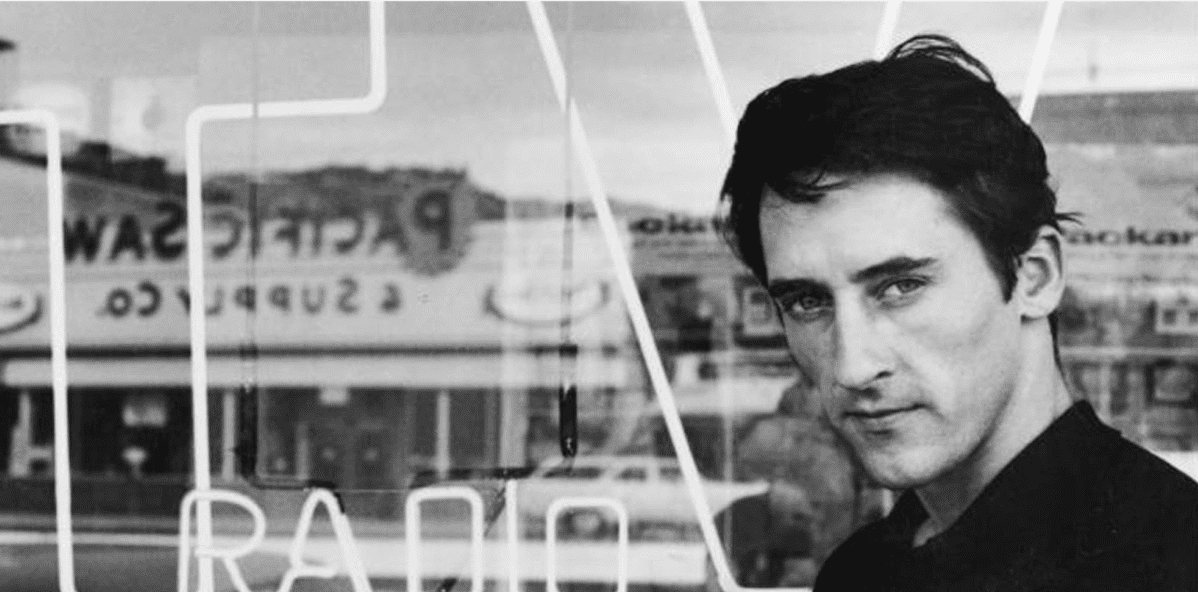

This American artist is known for his works in the pop-art style. In his artwork, he combines visual and textual elements. Thus, he creates his own distinct style that is recognized throughout the world. However, his artistic interests extend beyond painting to graphics, photography and cinema. He is well recognized for his paintings of words and phrases, which frequently reflect popular culture and Los Angeles life. Thanks to his innovative approach to painting, drawing and photography, he has influenced artists all around the world. His work as an artist has inspired neo-pop artists such as Jeff Koons. His word paintings influenced a large number of painters who then incorporated words and language in their work. In 2013, Time magazine named Ruscha one of the world’s 100 influential people. You may also learn about the special features of the Hilbert Museum of California Art. Find out more at i-los-angeles.
Biography
Ed Ruscha was born in 1937 in Omaha, Nebraska, and grew up in Oklahoma City. He became interested in art thanks to a man who lived nearby. He was a cartoonist. So, in 1948, Ruscha took his first painting class with portrait painter Richard Goetz and continued to study art in high school. Simultaneously, he became increasingly interested in the commercial printing process. At the age of 19, he relocated to California. As a result, Los Angeles came to have a major impact on his artistic life. There, he studied art at the California Institute of the Arts while also working as an illustrator.
Additionally, Ruscha worked in commercial art from time to time. In 1958, he spent half a year working at the Plantin Press. There he learned how to control the press. In 1961, he was able to travel around Europe for more than six months. The journey let him realize his own artistic ability, as well as his unique perspective on America and American life as a fascinating landscape of symbolism. After returning to America, his paintings continued to depict specific words such as “Boss” (1961), “Smash” (1963), “Honk” (1962), “Oof” (1963) and “Automatic” (1966). The artist stated that his 1961 painting “Boss” was his first mature work. According to Ruscha, the word has at least three meanings: an employer, a term for something cool and a workwear brand. Until the mid-1960s, Ed Ruscha created paintings of words that appeared to have been poured onto the canvas as a liquid. These included “Adios” and “Desire”.
After returning, he worked in commercial advertising before deciding to focus solely on the visual arts. His last commercial art position was at the Artforum magazine. While working at the Plantin Press, he created his first paintings. Additionally, these artworks were displayed at the exhibition New Paintings of Common Objects, which was held at the Pasadena Art Museum in 1962. At the same time, he made his first artwork with three-dimensional letters. Words and phrases that look as if they are made of drops of water or flowing ribbons convey the ironic sense of humor of the artist.

Creative work
Early in his career, Ed rejected the popular abstract expressionism movement. Instead, he found inspiration in common places and objects. His art was influenced by the works of Jasper Johns, Robert Rauschenberg and Edward Hopper. One significant element that sets Ruscha’s art apart from others is the transformation in the nature of language. In his artwork, he frequently repeats the same phrase or word over time. His words and phrases frequently have a popular, familiar tone, but their message is different. Ruscha puts language at the center of his work. He reflects on modern life in Los Angeles with authenticity and humor.
Ruscha frequently blends his passion for language with his love of the surrounding environment. His words are written on road signs, buildings and mountains. At the beginning of his career, he photographed buildings, gas stations, parking lots and other moments of life in Los Angeles. In his paintings and drawings, he uses words to poetically depict the city through themes of evolution and destruction. Rush’s first solo exhibition took place at the Ferus Gallery in Los Angeles in 1963. His art has also been displayed in Buffalo, Zurich, Oregon, San Francisco, Florida, Chicago, Japan, Paris, New York and Los Angeles, among other cities and countries.
Another aspect of the writer’s work that stood out was the materials he used to paint. From the late 1960s to the mid-1970s, he painted with alternative materials like gunpowder, food, spice and blood. He also utilized tomato sauce, fat, raw eggs, chocolate syrup and a variety of other products. Canvas was occasionally replaced with silk since the latter absorbed stains better. This is how he depicted modern American life: the things individuals eat and use on a daily basis.

Photographic books and cinematography
Ed lived in California, but his family lived in Oklahoma. So he frequently took the same route to see them. During one of the trips, his imagination was sparked by an unending expanse of highway lined with gas stations. Thus, these trips resulted in his first photographic book, “Twentysix Gasoline Stations” (1963). It is regarded as one of the artist’s most important books in his career. Between the 1960s and 1970s, Ruscha published a total of 16 photographic books capturing Los Angeles landscapes. In 1978, he published his final photobook, “Hard Light”. Ed has never considered photography as a finished product, but rather as a “technological tool” for producing his books. Additionally, Ruscha never combined photography with painting. He engaged in creating art books. One of his most famous works is “Every Building on Sunset Strip”. This book offers information about every building on one of Los Angeles’ most famous boulevards. The book also includes information on the street’s south and north sides. This is both a documentary and an artistic view of the urban landscape.
In the 1970s, Ruscha began producing short films. They featured a number of celebrities, including Tommy Smothers, who starred in the 1971 picture “Premium”, and Michelle Phillips in 1975’s “Miracle”. The artist also took on an interesting role as an actor. In the 2018 short film “Paradox Bullets”, he appeared as a tourist lost in the desert. He was only guided by the voice of Werner Herzog, the legendary filmmaker who directed it.

Ruscha and Los Angeles
In his artwork, he frequently depicted California’s changing landscape. His work’s subject matter evolved alongside changes in Los Angeles’ culture, slang and architecture. Despite his fascination with the changing surroundings, Ruscha’s art remains remarkably stable. He generally chose traditional painting and engraving over contemporary approaches like digital art.
In 2016, he presented a new painting exhibition in London and replenished the catalog of his large solo exhibition at the de Young Museum in San Francisco. In 2019, his painting “Hurting the Word Radio #2” (1964) sold for $52,485,000 at Christie’s auction in New York, with which the artist set a new world record.
