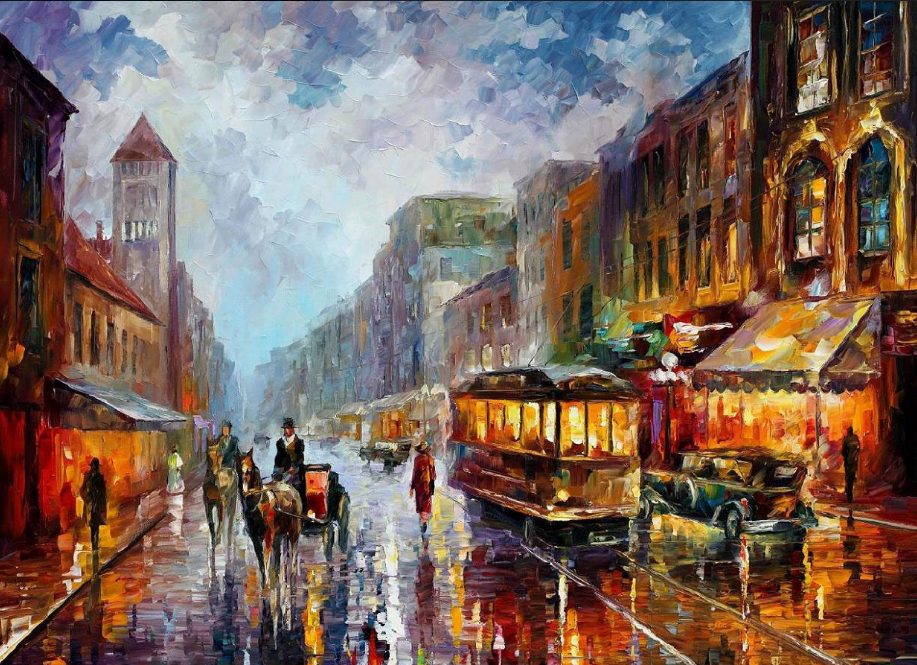

The city is filled with cultural treasures from all over the world. Some masterpieces end up in Los Angeles unintentionally, often as part of the private collections of the city’s billionaires or celebrities, eventually becoming accessible to the general public. The stories behind these pieces are just as captivating as the artworks themselves. That’s what i-los-angeles will explore next.
The Blue Boy
It is a well-known painting at the Huntington Library, Art Museum and Botanical Gardens. In 1770, the English artist Thomas Gainsborough painted a portrait of Jonathan Buttall, who was the son of his close friend. Although this identification has not been definitively confirmed, in 2013, Susan Sloman suggested that the boy might actually be the artist’s nephew, Dupont Gainsborough.
The young boy wore a historical outfit. It is believed that this was a tribute to the revolutionary Flemish painter from the 17th century, Anthony van Dyck. Interestingly, Thomas Gainsborough initially sketched something on the canvas but later covered it up. This very canvas was eventually repurposed for the famous portrait known as The Blue Boy.
The British public felt a sense of ownership over The Blue Boy painting. Initially, Jonathan Buttall owned it, a wealthy ironmonger who became bankrupt in 1796. After that, it changed hands to the politician John Nesbitt and then to the portrait artist John Hoppner. In 1809, it became part of Earl Grosvenor’s collection, adding a significant masterpiece.
The artwork was purchased in 1921 by railroad tycoon Henry E. Huntington. At that time, it was valued at an astonishing price of $728,800. Before making its way to California, the painting was displayed at the National Gallery in London.
Flower Day
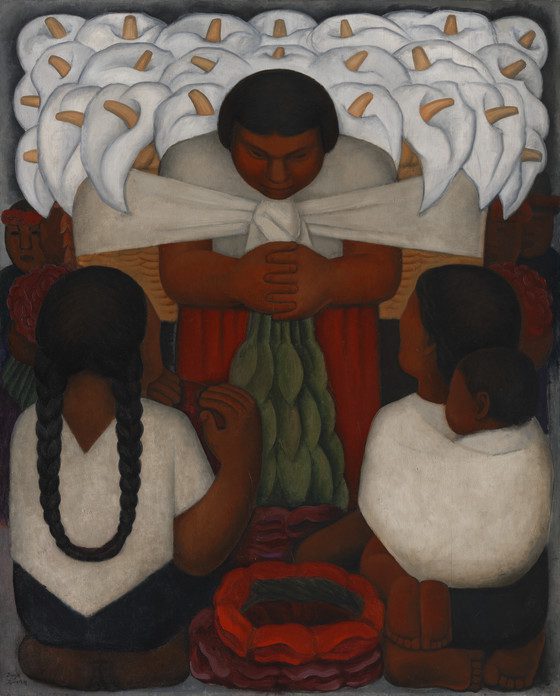
One of the most well-known works by Mexican artist Diego Rivera is Flower Day (also known as Flower Festival: Feast of Santa Anita, 1931). Throughout his professional life, he created numerous easel paintings and watercolor pieces featuring the indigenous cultures of Mexico. The unusual perspective of the flowers, a block-shaped figure, can be seen from above. The artist employed stylistic methods seen in his earlier Cubist artworks.
It is also important to focus on the artist himself. Diego Rivera was painting and traveling in Europe during the Mexican Revolution in his country. He returned to his homeland in 1921, focusing on a central theme in his work: celebrating the indigenous Mexican people and their rich traditions. The artist noted that upon his return, he found inspiration for incredible masterpieces all around him.
The artwork featuring flowers was showcased in a solo exhibition of Rivera’s creations at MoMA in 1931. Notably, he was the second artist (with Henri Matisse being the first) to receive this chance. At that time, Diego Rivera was a global sensation and one of the most discussed artists.
This masterpiece can be found at the Los Angeles County Museum of Art, commonly known as LACMA. The museum’s representatives obtained the painting during the First Pan-American Oil Painting Exhibition held in 1925.
Irises
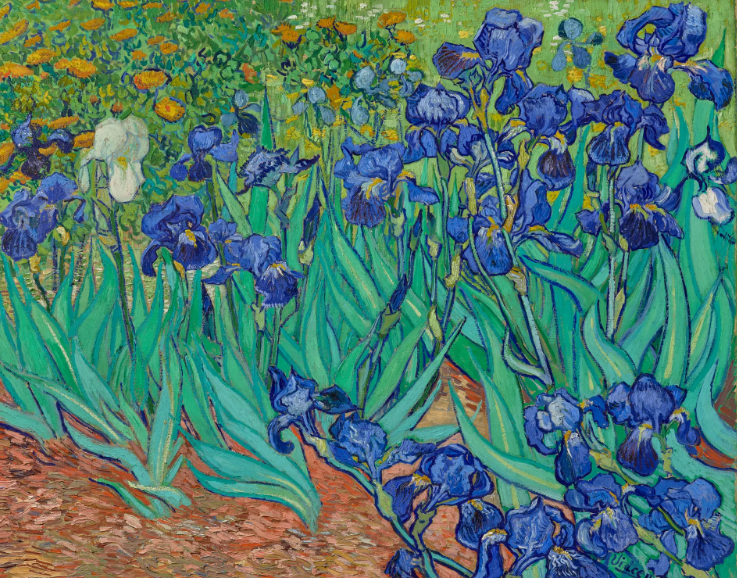
This well-known painting is by Vincent van Gogh. It is believed that he created this piece in 1889 while staying at an asylum in Saint-Rémy, France. Remarkably, in the last year of his life, Vincent van Gogh was able to produce nearly 130 paintings.
He created a painting of Irises that were directly observed in the garden. Every flower in his artwork stands out as unique, as the artist meticulously studied the motions and shapes to fashion a range of curved outlines and meandering lines.
The artwork Irises was bought by the French art critic Octave Mirbeau, who was the first to own this masterpiece, paying 300 francs for it. In 1987, Irises made history by becoming the most expensive painting ever sold at that time. It was later acquired by the J. Paul Getty Museum in 1990 and you can now see it on display at the Getty Center in Brentwood.
In 2012, Irises was positioned as the tenth most expensive painting ever sold when adjusted for inflation.
Dr. Pozzi at Home
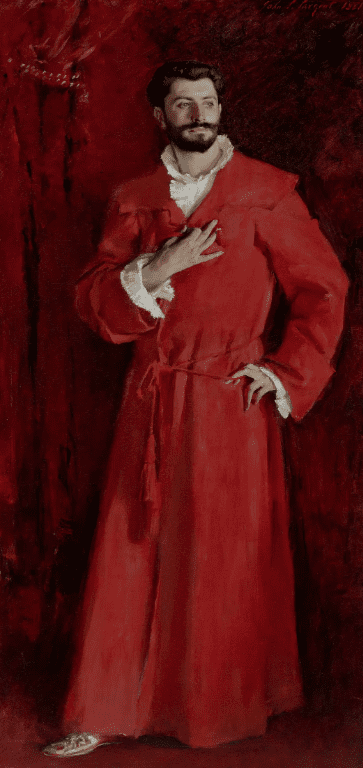
This artwork portrays Dr. Samuel-Jean Pozzi, a French surgeon from 1881. Pozzi was a man of many talents: a military figure, a politician and an art collector, he earned the title of ‘the father of French gynecology.’ Known for his charm, the attractive doctor was also famous as a ladies’ man.
His friend was the renowned American artist John Singer Sargent, who achieved worldwide fame for his stunning portrait work. In fact, he was the one who created the doctor’s portrait.
In 1967, Armand Hammer acquired the artwork Dr. Pozzi at Home from Samuel-Jean Pozzi’s son. The portrait was originally owned by Dr. Pozzi until he passed away in 1918, after which it was inherited by his widow and subsequently by his son.
The Hammer’s private collection was expanded and, following his death in 1990, became part of the Hammer Museum in 1991. It is worth adding the museum features exhibitions and collections that include both classical and contemporary art. Since the 1960s, the Hammer Museum has showcased the art of emerging and lesser-known artists and its public programs are regularly refreshed with new content.
Lansdowne Herakles
It is known that the painting was exhibited in 2015 at the National Portrait Gallery in London and later at the Metropolitan Museum of Art in New York. The piece inspired the English writer Julian Patrick Barnes to write the book The Man in the Red Coat, which was released on November 11, 2019.
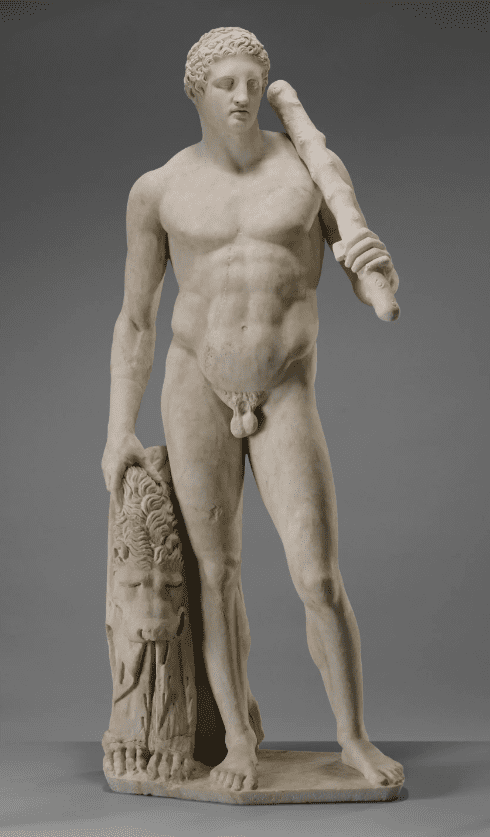
It is one of the largest statues in ancient Rome. The Getty Villa, a museum and educational center, houses it on the Malibu coast. It’s worth mentioning that the Getty Villa serves as a creative hub, emphasizing the arts and cultures of ancient Greece, Rome and Etruria. At the J. Paul Getty Museum, visitors can explore a diverse collection of over 1,300 artifacts spread across 27 galleries, with one of the standout pieces being the Lansdowne Herakles.
Who was that man? What tale did he have? He was a Greek hero, with a club resting on his left shoulder and the hide of the legendary Nemean lion in his right hand.
Some believe that the Lansdowne Herakles is one of the numerous replicas of a Greek sculpture. It is thought that the Roman Emperor Hadrian, who resided in Tivoli, just outside of Rome, commissioned such remarkable works.
In 1790, this incredible work was initially found in Tivoli, Italy, on the grounds of a villa that once belonged to the Roman Emperor Hadrian. After its discovery, the sculpture was acquired by Conte Giuseppe Fede, an Italian nobleman, collector and archaeologist and later found its way into the hands of British artist Thomas Jenkins.
In 1792, the Marquis of Lansdowne acquired the statue, which is now linked to his name. After its restoration, the statue was exhibited in his London residence. Notably, several parts were repaired, including the nose, the right forearm, a few fingers, the lion’s hide, a section of the right thigh and the left calf of Herakles. However, in the 1970s, these restoration elements were taken off due to concerns about the statue’s deterioration. Some of these 18th-century repairs were subsequently substituted with epoxy resin casts.
In 1930, the sculptures of the Marquis of Lansdowne were auctioned off. By 1951, they found a new home with art collector and oil magnate J. Paul Getty.
Cultural Treasures
These are just a few highlights of cultural treasures from around the world showcased in Los Angeles. When it comes to paintings, other museums have the option to borrow them for specific exhibitions. Every year, their value is increasing. Furthermore, there is rising competition among museums and creative centers, which means they must continually refresh their collections by hosting top-notch exhibitions.
Overall, Los Angeles is home to many billionaires and large corporations with the ability to invest in art and culture. The city’s appealing weather and laid-back lifestyle make it a magnet for artists and collectors. The current residents of Los Angeles and visitors can now view cultural treasures and genuine masterpieces in person, something that was previously inaccessible.