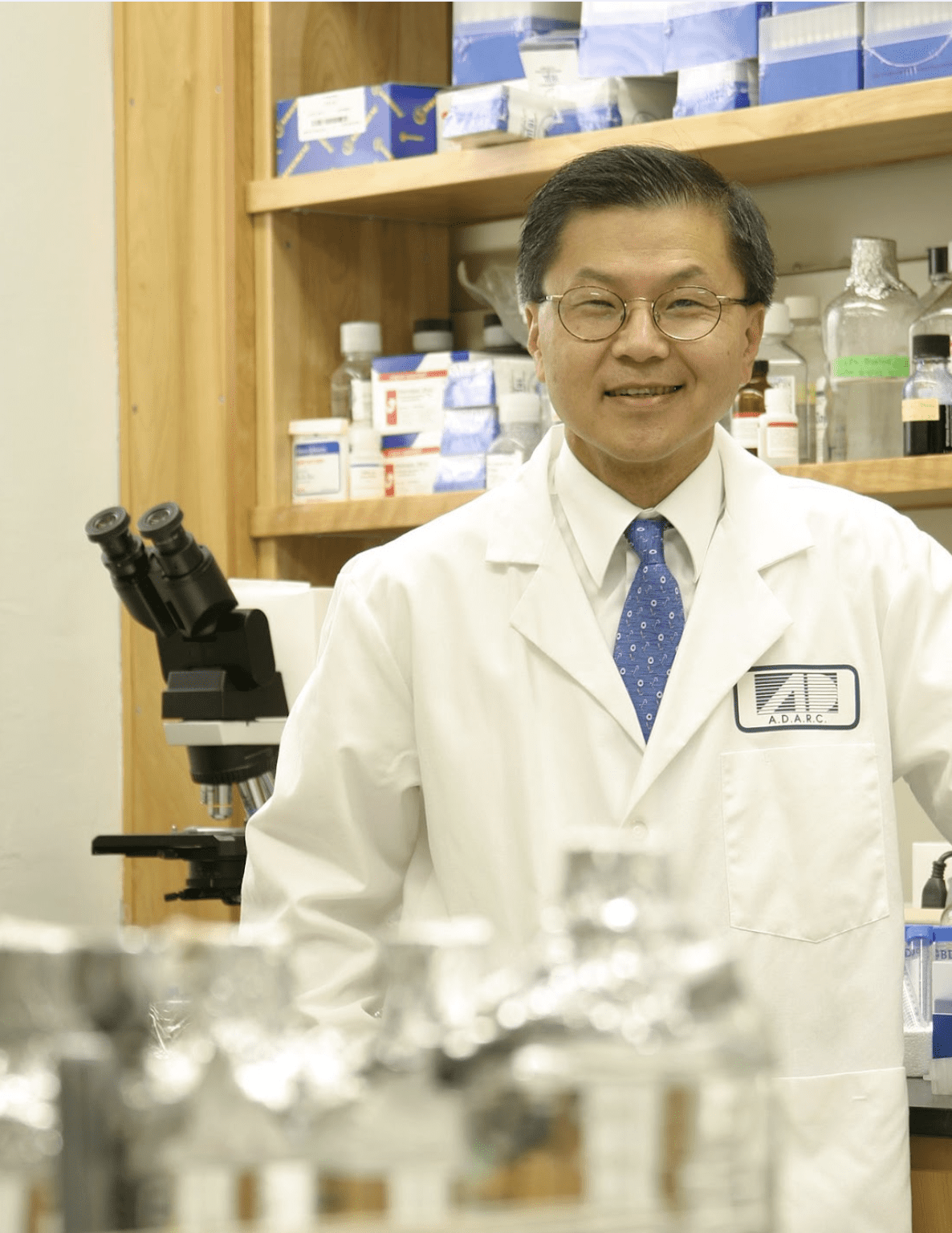

David Ho is MD, research director and founder of the Aaron Diamond AIDS Research Center. Dr. Ho holds degrees from the California Institute of Technology and Harvard Medical School. He also received clinical training in internal medicine and infectious diseases at Cedars-Sinai Medical Center and the UCLA School of Medicine. Dr. Ho has been actively involved in AIDS research for more than 20 years, having published over 350 articles on the subject. He also leads a consortium of Chinese and American organizations working to resolve the HIV/AIDS crisis in China. You may also learn about Gideon Manning, a doctor who explores issues of life and death. Find out more at i-los-angeles.
Biography
David Ho was born on November 3, 1952, in Taichung, Taiwan. In 1956, David’s father traveled to America in quest of a better life. Then, when his son was 12 years old, his father brought him and his mother to America. So, they arrived in a foreign country, with no knowledge of the language or customs. The family started a new life in Los Angeles. David excelled in school and after graduating from it attended the Massachusetts Institute of Technology. There, and then at the California Institute of Technology, David studied physics. Despite his short stature, he enjoyed playing basketball and chess. David’s interest in physics faded quickly, and he pursued molecular biology and medicine. The talented young man got accepted into Harvard Medical School. There, he first encountered AIDS patients. They were mostly young people, his peers. Their appearance and poverty astounded David, so he decided to fight the disease.

AIDS research
During his research, Ho took a completely different approach to the AIDS virus. He uncovered the hidden nature of how the virus attacks and destroys the immune defenses of the human body. His theoretical discoveries, confirmed by tests with so-called inhibitors, led to the potential of effective AIDS therapy. What was the novelty of Dr. Ho’s ideas? The fact that he chose to fight AIDS at an early stage, while the HIV virus was still “dormant” in the patient’s body. Ho demonstrated that HIV’s “hibernation” is in fact a fatal mistake. HIV does not sleep but rather acts very actively. Though, Ho was not the first person to isolate the AIDS virus. He arrived at this conclusion fourth, trailing Luc Montagnier, Robert Gallo and Jay Levy. However, he was the first to disprove the myth of HIV passivity. Philanthropist and humanitarian Irene Diamond became interested in Dr. Ho’s work. She decided to establish an AIDS research center in New York and invited the then-unknown 37-year-old David Ho to head it.
Thus began a new phase in the fight against AIDS. Dr. Ho set himself the task of discovering what is going on in the body of an HIV-infected person who does not yet have AIDS. Instinct told David that the answer to this question might reveal effective ways to combat the invincible disease. Routine blood tests showed that the number of deadly viruses at this stage is practically zero. However, the brilliant notion was in the fact that Dr. Ho was able to differentiate between a virological and an arithmetic zero. There was no HIV in the blood, but thousands and millions were present in the lymphatic system. Like invisibles, they multiplied there. While doing experiments on twenty infected volunteer participants, Dr. Ho discovered two things. First, the fight against AIDS should begin while the patient’s immune system is still functioning properly. Second, no single weapon, no matter how powerful, can defeat AIDS.

Scientific experiments
At the beginning of 1996, other concerns, including palliative care, cytomegalovirus infection treatment and outpatient infusion therapy planning, were addressed. At the Third Conference on Retroviruses and Opportunistic Infections in Washington in February 1996, Bill Cameron presented the initial findings of the study of the drug AVT-247. The incorporation of ritonavir solution treatment for oral administration reduced mortality associated with AIDS from 38% to 22%. As a result, the potential for novel medications became apparent.
Dr. David Ho then conducted research that shed light on the HIV life cycle. The phrase “latent stage of HIV infection” became irrelevant after it was discovered that HIV continuously and actively replicates in the human body, destroying CD4 lymphocytes. In several HIV treatment centers, all patients began taking HAART. Between 1994 and 1997, the proportion of patients in Europe who did not receive antiretroviral treatment decreased from 37% to 9%, while the proportion of those who received HAART grew from 2% to 64 percent. In June 1996, with the registration of nevirapine, the first non-nucleoside reverse transcriptase inhibitor, a new class of antiretroviral medications came into use.

Ho began building a collaborative network to eliminate the HIV virus. Due to the usage of multiple medications, the virus had to make three mutations in order to survive. According to computer calculations, HIV has a one in ten million chance of doing so. These figures justified the experiment’s risks. Furthermore, the results were fantastic. Seven of David’s ten patients recovered quickly. A blood test revealed that the quantity of HIV viruses had decreased to levels below those detectable analytically. The immune systems of patients began to resuscitate. David Ho published his findings in a journal and then gave a sensational speech at a conference in Vancouver. He stated that his “anti-virus cocktails” are unlikely to help individuals whose disease has progressed to full-blooded AIDS. The patient will be addicted to “cocktails” for the rest of their lives. A “cocktail” is dozens of medicines taken daily. They should be taken every day at a specific time. Any violation of the intake schedule, and even more so pauses, not only prevents treatment but may further exacerbate the disease. Side effects can be dangerous as well, ranging from diarrhea, exhaustion and cramps to kidney stones and liver damage.
In several countries, the HIV epidemic is still in its early stages and gaining strength. This definitely applies to China. Dr. David Ho works with colleagues in the United States and China to help people.

The scientist’s awards
Dr. Ho has won various prizes and recognition for his scientific contributions. He obtained seven honorary doctorates. He was also invited to talk at the California Institute of Technology, the Massachusetts Institute of Technology and the Harvard School of Public Health. His awards include the Ernst Jung Prize in Medicine, the Mayor’s Award for Excellence in Science and Technology, the Squibb Award and the Hoechst Marion Roussel Award. Also, Dr. Ho has been elected a member of the American Academy of Arts and Sciences, the Chinese Academy of Engineering and the National Academy of Medicine in the United States.
Dr. Ho also serves as an honorary professor at Peking Union Medical College (Chinese Academy of Medical Sciences), the Chinese Academy of Sciences, the University of Hong Kong and Wuhan University. He was a member of the Harvard University Board of Overseers and the California Institute of Technology’s Board of Trustees. In 1996, Time magazine named Dr. Ho Person of the Year, and in 2001, he was awarded the Presidential Citizens Medal.