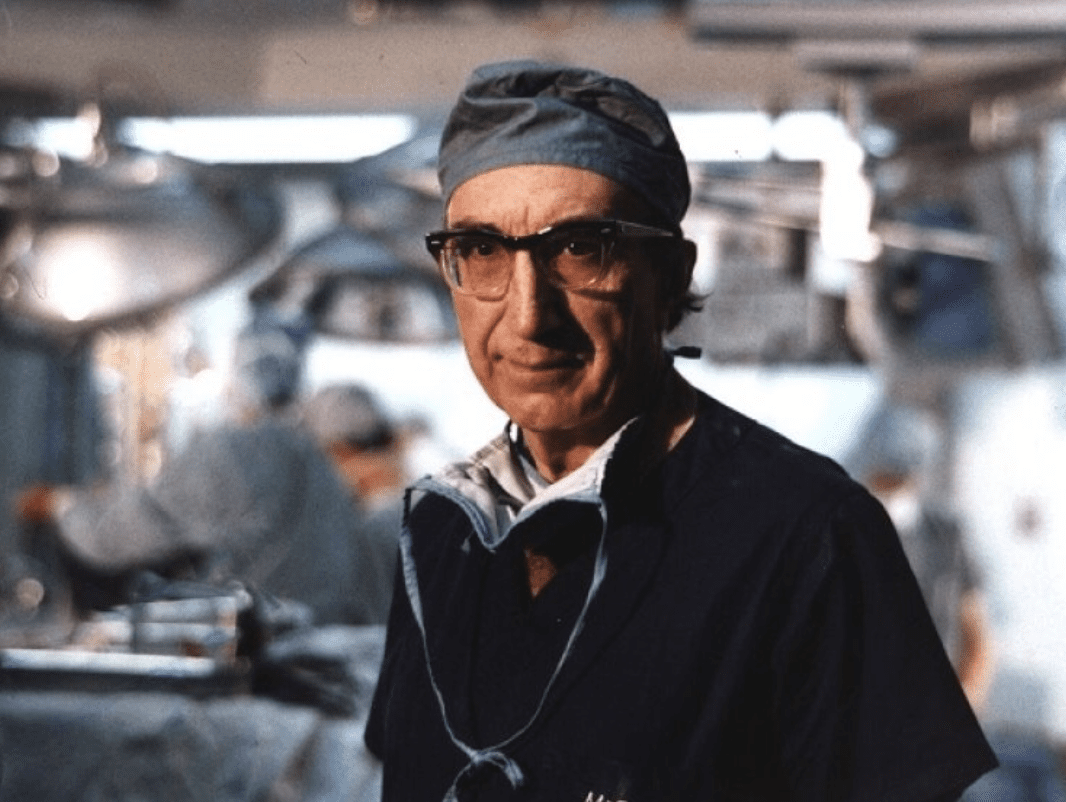

This is a great American cardiac surgeon of the twentieth century, who will forever remain in the history of cardiovascular surgery as one of the most respected specialists in the field. Over a 75-year career, his discoveries and developments elevated cardiovascular surgery to a new level and influenced national health policy. He pioneered several dozen surgical procedures, including aneurysm repair, coronary bypass surgery and endarterectomy, which save thousands of lives each year. You may also learn about the life of Elizabeth Follansbee, the first female doctor in Los Angeles. Find out more at i-los-angeles.
Biography
The talented surgeon was born on September 7, 1908, in Lake Charles, Louisiana. He was the son of Lebanese immigrants. Michael, the eldest of five children, was raised by his parents with a love of learning, self-discipline, a desire for excellence and determination. His ability to effectively organize each aspect of his life in the future enabled him to live a long and productive life. After graduating from high school, he attended one of the leading private educational institutions in New Orleans, Tulane University. He not only earned a bachelor’s degree but also finished an internship and residency there. He received training in Strasbourg and Heidelberg from renowned American surgeons who played a major role in determining the student’s destiny. Young DeBakey did not instantly choose to specialize as a cardiac surgeon but instead explored other areas of medicine. Throughout his 75-year career, DeBakey never limited his interests to a single field of science. He did not just operate, he sought ways to make each doctor’s work more efficient. He performed more than 60,000 operations. DeBakey performed his last operation at the age of 90. He was also not bound to a single medical facility. The heart surgeon worked in California hospitals, and among his followers were doctors from Los Angeles medical institutions, who implemented his latest techniques and saved people’s lives.
Among his patients were John F. Kennedy, King Edward VIII of England and Marlene Dietrich. In addition to the surgeries he performed, Dr. DeBakey published over a thousand medical articles, chapters and books on various aspects of surgery and medicine, as well as ethical, socioeconomic and philosophical essays. His sisters, Selma and Lois DeBakey, helped him with this effort. They were pioneers in professional medical writing and editing.
Dr. DeBakey spent his entire life enjoying and studying music and literature, particularly poetry. His productivity demonstrated an exceptionally unique level of self-discipline. The heart surgeon died unexpectedly at his home on July 11, 2008, at the age of 99, two months before his 100th birthday. However, he was able to live his century brightly, actively and to the advantage of others.

Surgical activity
Michael DeBakey was a pioneer in aortic dissection surgery. This condition is among the most cruel and merciless killers of man. In 1963, the Journal of the American Medical Association co-authored an article titled “Correction of Acute Dissecting Aneurysm of the Aorta with Valvular Insufficiency.” This was the first account of successful emergency treatment for acute aortic dissection. The article described the treatment of a 32-year-old patient who was admitted to the hospital with severe chest pain. He had a considerable difference in blood pressure between his left and right hands, as well as the typical symptoms of aortic valve insufficiency.
He underwent surgery, and the aortic rupture was repaired. The main surgical purpose of the operation was to clamp the aorta just below the brachiocephalic trunk after the beginning of artificial blood circulation and dissect the ascending part of the aorta just above the aortic one.
Ironically, on December 31, 2005, Dr. Michael DeBakey suffered a type 2 aortic dissection, according to a classification that he and his colleagues studied over 50 years earlier. DeBakey entrusted the operation to his students, making him the world’s first patient to successfully undergo such surgery at an advanced age. Following this major operation, DeBakey returned to work the very next year.
Dr. DeBakey possessed a unique ability to motivate and inspire his students and professional colleagues to reach their full potential. He may have been harsh, but his lessons were memorable. DeBakey was an important figure at one of the world’s largest medical centers, Baylor College in Houston, where he served as honorary rector until the last day of his life. DeBakey played an active role in the establishment of the world’s largest National Library of Medicine. He passed on his valuable knowledge to several generations of medical students, and in 1976, his students created the DeBakey International Surgical Society. In addition, the DeBakey Biochemistry Center was established by the Baylor University Board of Trustees, where DeBakey oversaw the College of Medicine.

Discoveries and developments
He was responsible for such groundbreaking discoveries and developments as the roller pump, artificial heart and vascular needle holder. The young surgeon made the first prostheses on a regular Singer sewing machine. Also, Michael DeBakey was the first to suggest smoking as a cause of lung cancer.
DeBakey was the first surgeon to successfully conduct complex surgeries such as carotid endarterectomy, the first blood vessel prosthetics and one of the first surgeons to introduce coronary artery bypass grafting. In the 21st century, vascular prostheses are a common feature of modern medicine, but in the middle of the last century, DeBakey made a real breakthrough that gave hundreds of thousands of people hope for a long and happy life. Based on the potential of vascular bypass surgery and prosthetics, Michael DeBakey was the first to create bifurcation aortic bypass surgery. This surgery is commonly performed to treat Leriche syndrome. DeBakey taught surgeons how to remove atherosclerotic plaques by performing endarterectomy surgery. Thanks to Michael DeBakey, the world’s knowledge about the treatment of complications of atherosclerosis has significantly expanded.
DeBakey also developed a system for the mobile Army surgical hospital. Over the years, this system has saved countless American servicemen during conflicts in Vietnam and Korea. In the twenty-first century, it serves as the foundation for rescuing injured servicemen.
For 50 years, he personally advised several American presidents and his patients included prominent leaders from numerous countries throughout the world. According to preliminary estimates, DeBakey performed between 50 and 60 thousand successful operations during his lifetime, restoring to full lives many patients of various ages and nationalities, as well as social classes. He was an example of humanism and great kindness to people from all social backgrounds, also, the surgeon was very categorical about animal experiments. He believed that animals sacrificed for scientific purposes benefit all of humanity.

Artificial heart
Since 1962, under DeBakey’s leadership, Baylor College has been working on developing an artificial heart, for which a huge grant was received. Regardless of the scientist’s merits, in 1969, heart surgeon Denton Cooley performed the first operation, implanting a prototype artificial heart to a person. The conflict between scientists lasted over 40 years. It wasn’t until 2007 that the Denton A. Cooley Cardiovascular Society officially acknowledged DeBakey’s merits.
So we can conclude that Michael DeBakey’s path to heart surgery is the path to perfection, and it has resulted in the saving of thousands of lives all over the world.
