

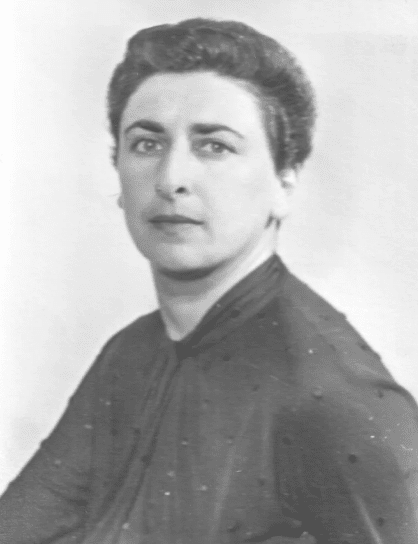
She is an outstanding woman pioneer in science who you may not have heard of before. Elizabeth Stern’s research has become the basis for the current understanding of the prevention, diagnosis and treatment of cervical cancer. Find out more at I-los-angeles.
How did Elizabeth Stern’s path begin?
She was born into a large family (the fifth of eight children) in Cobalt, Ontario. Later, her family immigrated to Poland in search of a better life.
She graduated from medical school in Toronto at the age of 23. During her studies, she met her future husband, a PhD student in chemistry named Solomon Shenkman. The couple married in 1940 and subsequently immigrated to Los Angeles. Elizabeth finished her residency in pathology at local hospitals.
The woman worked in the following institutions:
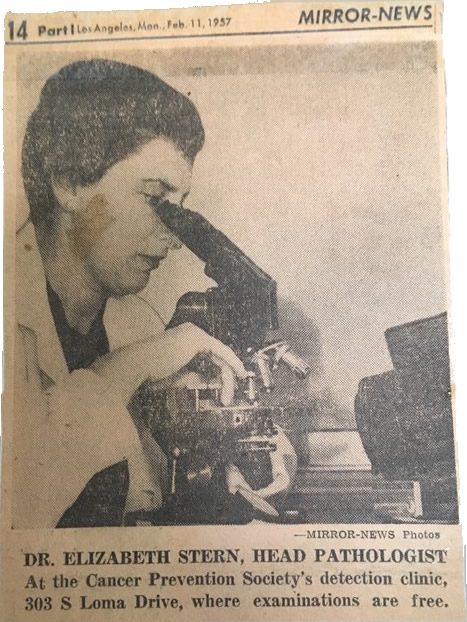
- Los Angeles Cancer Detection Center. Elizabeth Stern held the position of Director of Laboratories and Research from 1950 to 1960
- the next place of work was the University of California, Los Angeles School of Medicine. She was the head of the cytology laboratory. In 1961, Elizabeth Stern started her research work in the Department of Pathology. Her laboratory was moved to the UCLA School of Public Health in 1963
- the researcher cooperated with the Jet Propulsion Laboratory and Dr. Dorothy Rosenthal for the Pap test.
Research interests of Elizabeth Stern
One of Elizabeth’s main research directions was the study of abnormal cell growth and its impact on the development of cervical cancer. Back in the 1950s and 1960s, there was no clear definition of the early stage of cervical cancer, though the results of a smear test could be a signal. Unfortunately, dysplasia on smears was not a reason for concern in those days. It was Stern who assumed that morphological abnormalities may actually signal the development of cervical cancer.
For the study, Stern and her team arranged long-term epidemiological research. Thus, samples were gathered from over 10,000 women in the Los Angeles district. The research results showed that women with dysplasia have a considerably higher risk of developing cervical cancer in the future. Thanks to Elizabeth Stern, the public has received indisputable evidence that dysplasia is an early marker of cervical cancer.
Contraceptive pills
Elizabeth Stern’s research revealed that original contraceptive pills, which have a high dose of estrogen, increase the risk of cervical cancer by six times. The research was quoted in all information resources and influenced the pharmaceutical industry. Companies were forced to reformulate and restart contraceptive pills to protect the health of women.
The underestimated role of women in science
It is a shame that women’s contribution to the development of science is underestimated. This has happened historically. Her daughter recalled that the hardest time for her mother was her first year at the University of California, when Elizabeth Stern, a woman scientist, was simply not paid. She is considered one of the most prominent medical scientists who worked in the middle of the 20th century. It was a period of epidemiology and cancer. Despite the role of women in groundbreaking research and its value for the further development of science, you are unlikely to read about someone like Elizabeth Stern in medical books. It will be problematic to find departments or symposia devoted to her memory.
Nevertheless, Elizabeth Stern’s discovery impacted the further development of science and became an innovative breakthrough for the medical society. As a result, modern women are able to identify pathology during routine screening with the Pap test. Patients are observed for further progression.
Through her perseverance and determination, she managed to change not only her attitude towards herself but also make a meaningful contribution to the development of science and shape the field of cytopathology decades ahead.