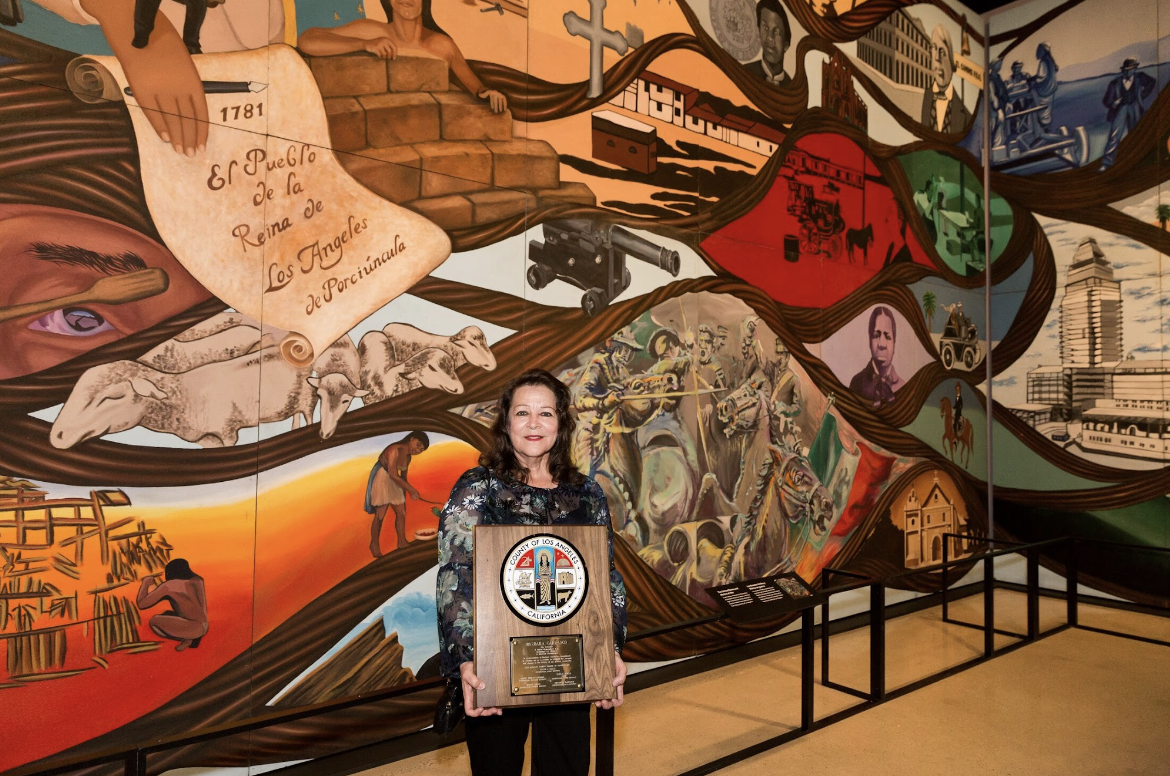

Barbara Carrasco’s mural L.A. History: A Mexican Perspective is a landmark work of Mexican-American art that tackled pressing questions of historical memory, migration, and discrimination in California. Commissioned in 1981 to mark the city’s bicentennial, the 80-foot panoramic work offered an alternative look at Los Angeles’ past—told from the perspective of the Mexican community and those whose stories had long been excluded from official accounts. Because of the controversies surrounding the events and figures it depicted, the mural faced heavy censorship and remained hidden away from the public for decades. In this article on i-los-angeles.com, we explore what Barbara Carrasco portrayed, why her work sparked fierce institutional pushback, and how this mural became an enduring symbol of the fight to represent the city’s history from diverse viewpoints.
Barbara Carrasco: From UCLA Activist to the Voice of Chicano Culture
From an early age, Barbara Carrasco dedicated her life to fighting racism, sexism, and social injustice. While studying at the University of California, Los Angeles (UCLA), she made history as the first female editor of the Mexican-American student newspaper La Gente. She later earned her Master of Fine Arts degree from CalArts, gaining widespread acclaim through exhibitions across the United States, Europe, and Latin America.
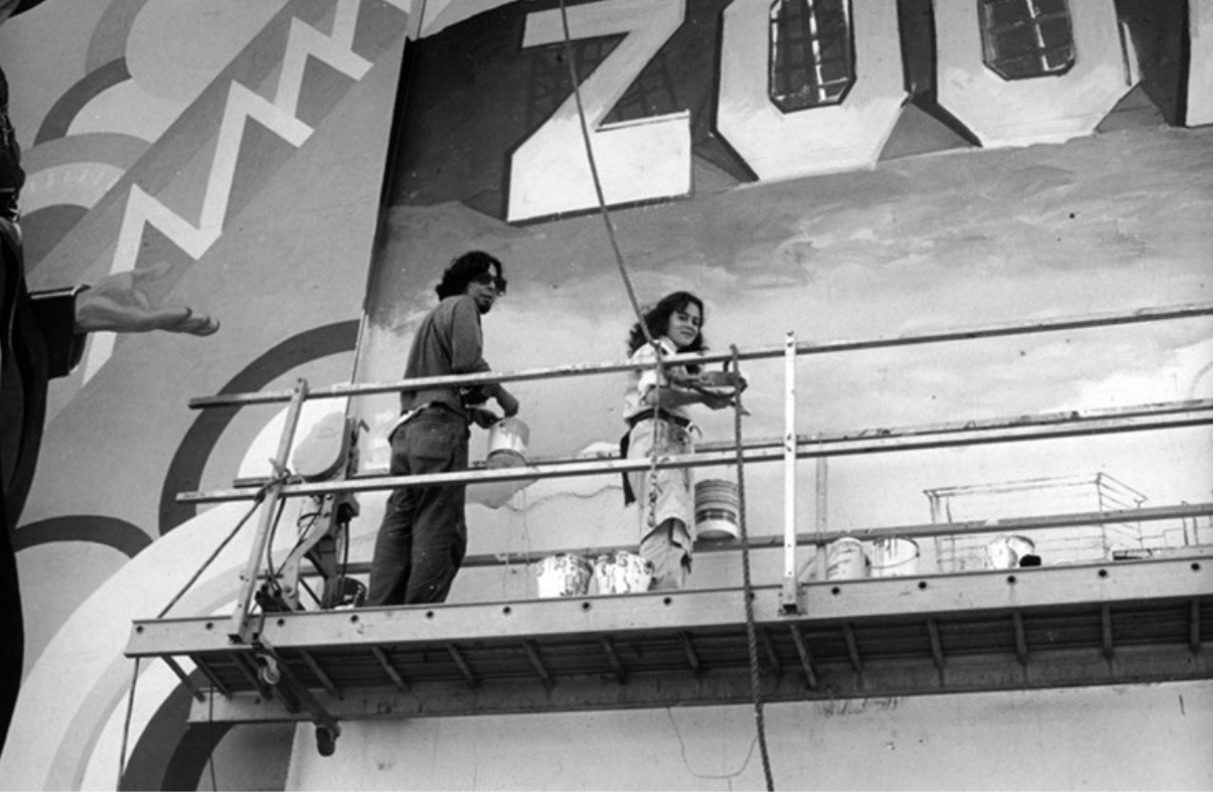
Carrasco’s artistic practice has always been deeply rooted in muralism and printmaking—mediums intentionally chosen for their direct accessibility to everyday people. Her core creative mission became reinterpreting official narratives and bringing to light the people and events that school textbooks deliberately ignored.
“It was my chance to show what I longed to see in the history books,” Barbara Carrasco recalled of her vision.
The Concept Behind “L.A. History”: The Queen of the Angels’ Hair as a Living Chronicle
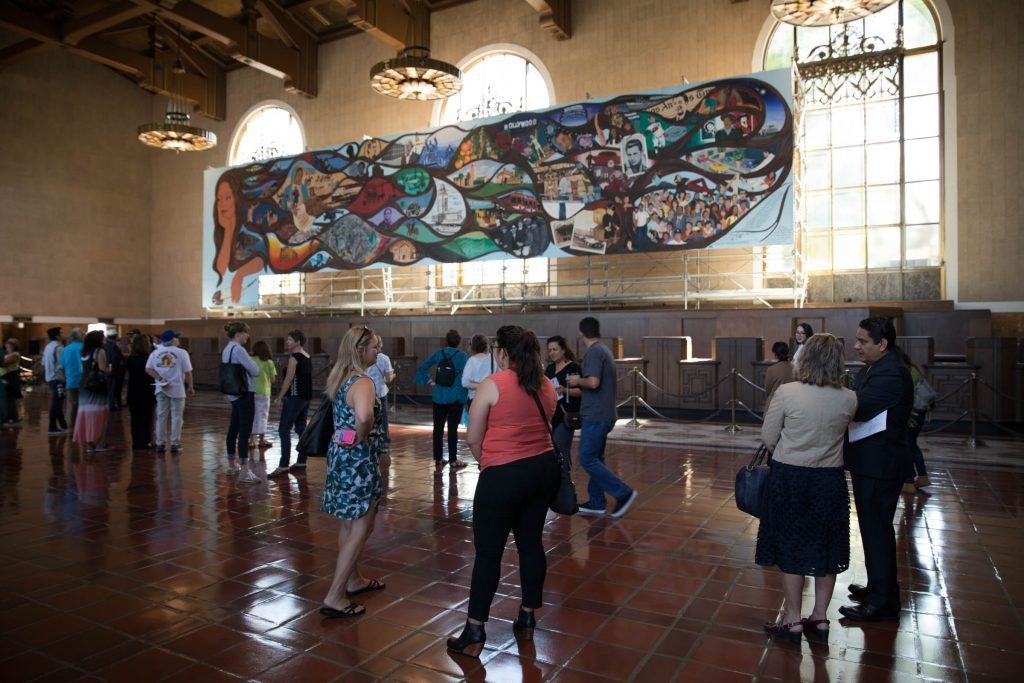
In Barbara Carrasco’s monumental mural L.A. History: A Mexican Perspective, the city’s past unfolds in a strikingly original way. Instead of a conventional panoramic landscape, the artist centered the work on an Indigenous woman—the Queen of the Angels (Nuestra Señora Reina de los Ángeles). Her flowing black hair weaves across the piece, serving as a dynamic canvas for scenes depicting the metropolis’s past and present.
The composition spans 43 wood and masonite panels, stretching roughly 80 feet (24 meters) in length. Interwoven throughout the strands of hair are 51 historical vignettes, tracing the region’s development from prehistoric times to the 20th century. This structure portrays Los Angeles not just as a city of postcard landmarks and Hollywood glamour, but as a living space forged through the experiences of Indigenous peoples, waves of migration, social upheaval, and cultural richness.
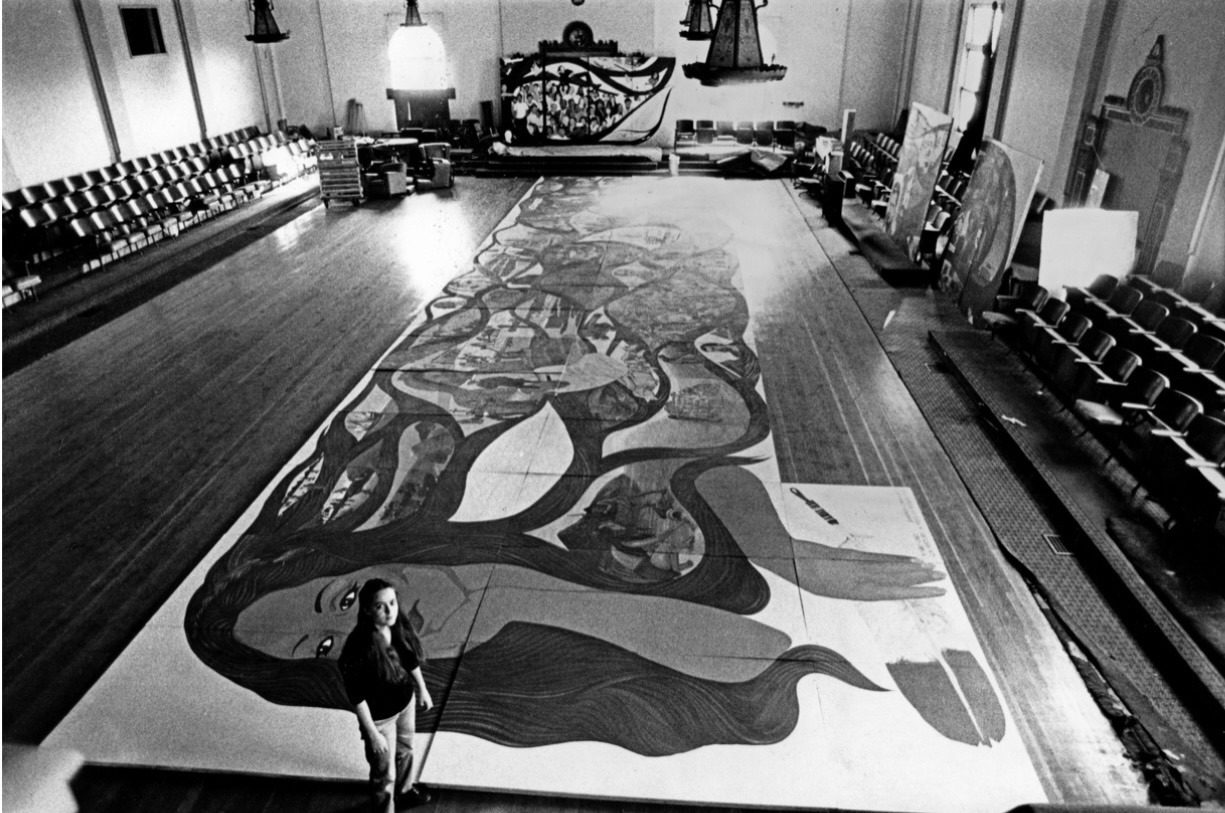
For Carrasco, it was vital to depict the city’s heritage in all its complexity. Alongside celebrated landmarks, the mural features unvarnished scenes of violence and discrimination—painful chapters that had long been swept under the rug in mainstream accounts.
Yet the mural is far from a mere catalog of hardships. It also honors pioneering cultural figures, grassroots leaders, and architectural icons that shaped the city’s character. Among the featured sites are the Hollywood Sign, Grand Central Market, Union Station, City Hall, the Angels Flight funicular, and the historic Victorian homes of Bunker Hill—many of which were subsequently razed during urban renewal projects.
Carrasco paid special tribute to trailblazers whose lives reflect the city’s diverse fabric. Featured figures include Biddy Mason, a formerly enslaved woman who rose to become a successful real estate entrepreneur and philanthropist; labor rights leader Dolores Huerta; journalist Ruben Salazar; Hall of Fame pitcher Sandy Koufax; playwright Luis Valdez; and Mayor Tom Bradley.
Indigenous communities hold a foundational place in the composition, particularly the Gabrielino-Tongva people, who inhabited the basin long before Spanish colonization. Their inclusion serves as a vital reminder that the history of Los Angeles did not begin with modern settlement, but reaches back thousands of years.
The 1981 Censorship: Why Officials Demanded Scenes Be Erased
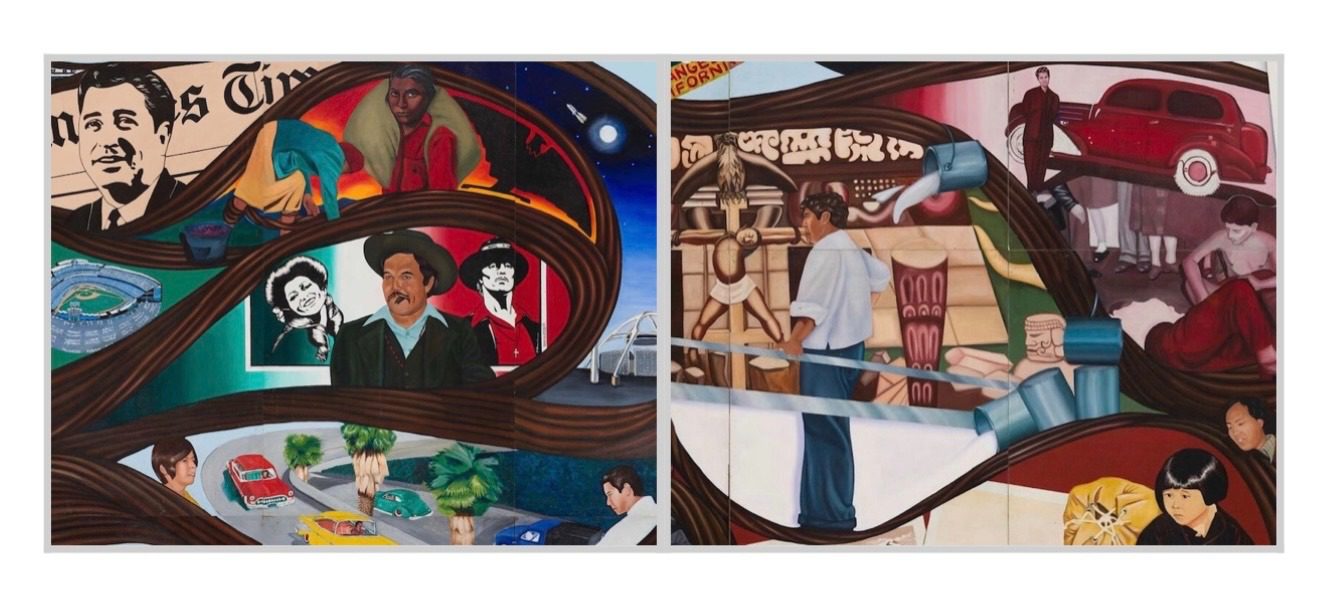
While the project was commissioned for the city’s bicentennial to celebrate its history, Carrasco chose an honest, multi-layered narrative over a whitewashed showcase. This bold approach quickly sparked conflict with her sponsor, the Community Redevelopment Agency (CRA) of Los Angeles. When CRA officials reviewed the progress, they demanded the removal of 14 specific vignettes they deemed too controversial. For Carrasco, capitulating was out of the question: altering the design meant compromising the entire vision of presenting history without sanitizing uncomfortable truths.
The vignettes targeted for removal were precisely those that exposed racial violence, state-sanctioned oppression, and systemic inequality across Los Angeles history.
- The 1871 Chinese Massacre.
On October 24, 1871, an armed mob stormed Los Angeles’ Chinatown, murdering at least 18 Chinese residents. It remains one of the deadliest mass lynchings in California history. Depicting this atrocity shattered the sanitized myth of effortless progress and harmony that city boosters preferred to showcase.
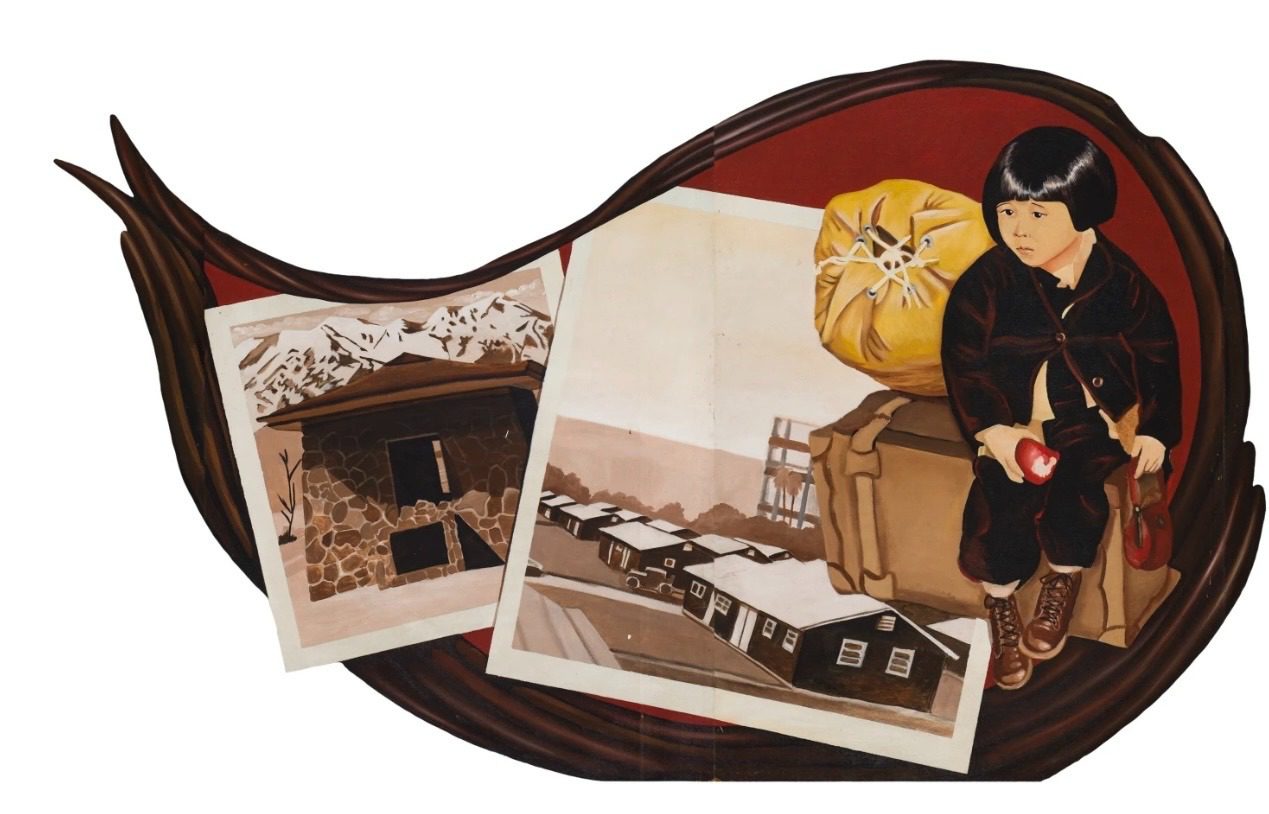
- Japanese American Internment during World War II.
Following the outbreak of World War II, the federal government forcibly evicted and incarcerated tens of thousands of people of Japanese descent, most of whom were American citizens. In the mural, this injustice is captured through a poignant scene of a young girl sitting atop a suitcase—a tender, personal vignette conveying the human toll of state-sponsored displacement.
- The Zoot Suit Riots of 1943.
In June 1943, white American servicemen and mobs assaulted young Mexican Americans across Los Angeles, stripping and beating them in the streets. Law enforcement failed to protect the victims, and in many instances, officers arrested the battered youths instead of their assailants. The event became a glaring symbol of wartime prejudice and institutional discrimination against the Chicano community.
- The death of journalist Ruben Salazar.
On August 29, 1970, journalist Ruben Salazar was killed during the National Chicano Moratorium March—a massive anti-Vietnam War protest that highlighted the disproportionate casualty rates among Mexican-American soldiers. Salazar was struck by a tear gas canister fired by a sheriff’s deputy into the Silver Dollar Café. His death remains a galvanizing flashpoint regarding police accountability, civil rights, and press freedom.
- The whitewashing of David Alfaro Siqueiros’ mural.
In 1932, famed Mexican muralist David Alfaro Siqueiros completed América Tropical on Olvera Street, depicting an Indigenous figure crucified beneath an American eagle. Deemed too politically incendiary, the mural was whitewashed shortly after its completion. Its depiction in Carrasco’s work underscored a recurring history of artistic censorship by powerful institutions.
The Copyright Battle: How Barbara Carrasco Defended and Saved Her Mural
Officials exerted immense pressure on the 26-year-old artist. They withheld her wages, delayed the delivery of construction materials needed to finish the panels, and demanded that she surrender all legal copyright ownership of the piece.
Tensions reached a boiling point on June 28, 1982. Acting on CRA orders, workers attempted to quietly move the mural from a City Hall East storage facility to an open wholesale produce market—a damp environment where moisture would have irreversibly destroyed the wood panels. By chance, Carrasco arrived on site, raised the alarm, and with urgent help from contacts in the mayor’s office and local community leaders, managed to physically stop the truck from leaving.
CRA administrators repeatedly urged her to replace the controversial segments with harmless, decorative images, but Barbara Carrasco steadfastly refused to alter a single brushstroke.
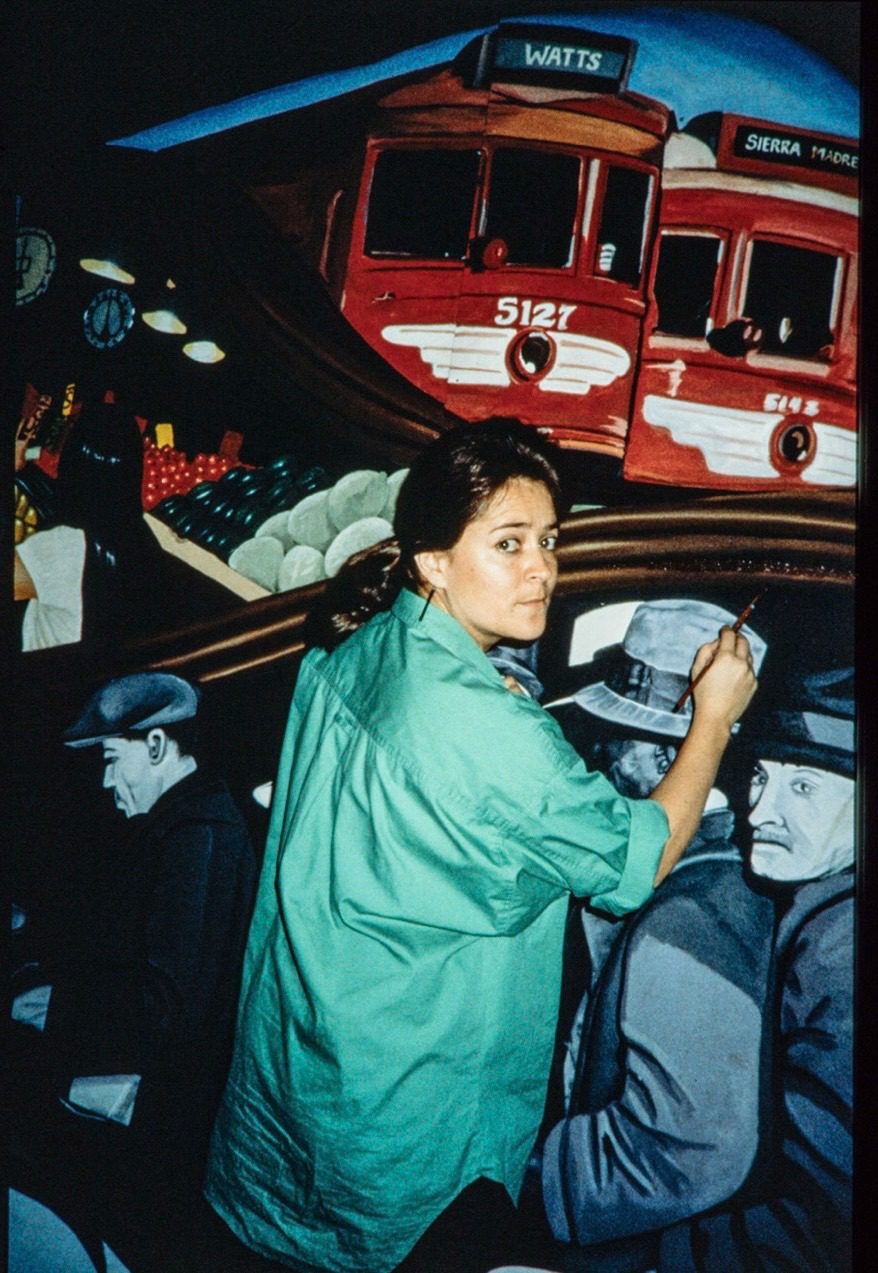
“They asked me why I was fighting so hard, why I couldn’t just give in and take out the images,” Carrasco later recalled in an interview. “My conscience wouldn’t let me. I couldn’t compromise the truth. The mural was truthful, and I refused to replace it with a lie.”
In 1983, following an arduous legal dispute, Carrasco successfully secured full legal ownership and copyright of her artwork. Yet her victory came at the cost of obscurity: for more than four decades, the 43 heavy panels remained in storage. Carrasco paid storage fees out of her own pocket or relied on the hospitality of sympathetic organizations, including the headquarters of the United Farm Workers.
Rescuing a Masterpiece: A Permanent Home at NHM Commons in Los Angeles
Over the course of 40 years, the mural was displayed in public only a handful of times—including a brief two-week showing in 1990 and during the ¡Murales Rebeldes! exhibition at LA Plaza de Cultura y Artes. In 2018–2019, the Natural History Museum of Los Angeles County (NHM) organized a special temporary installation titled Sin Censura: A Mural Remembers L.A.
Recognition came step by step. In 2020, the Natural History Museum officially acquired the masterpiece for its permanent collection.
Today, L.A. History: A Mexican Perspective has found its long-overdue permanent home in NHM Commons, the museum’s new community wing in Exposition Park. In a fitting triumph, the expansive welcome space is open to all visitors completely free of charge, with no museum admission required. What authorities once tried to hide behind closed doors is now openly accessible to every resident and visitor in the city.
The story of Barbara Carrasco and her mural is far more than an episode in the life of a single artist or municipality. It is a powerful testament to the necessity of defending historical memory against attempts to sanitize or rewrite it for political convenience.
Through uncompromising artistic integrity and devotion to truth, Barbara Carrasco preserved a rich, authentic portrait of Los Angeles’ past for generations to come. Her masterpiece stands as a timeless reminder: efforts to bury history will ultimately fail, and truth will always find its way into the light.