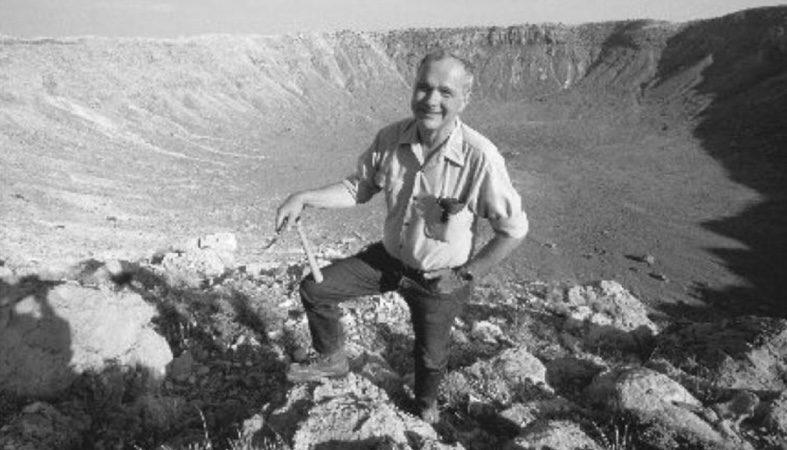

Eugene is the founder of a new scientific discipline, astrogeology. He also plotted the geological map of the Moon based on visual observations and modeling approaches for crater formation. Even before American astronauts started flying into space, the man taught them basic geology and the geology of the Earth’s satellite. The scientist was to fly to the Moon as the most qualified geologist but was medically disqualified due to health reasons. Learn more at i-los-angeles.
Eugene could have flown to the Moon
Geologist Shoemaker was involved in the preparation of American astronauts. He himself was a potential candidate for a flight on the Apollo spacecraft and was even appointed as the first geologist who would walk on the Moon. However, he was disqualified by a medical board because he was diagnosed with Addison’s disease, adrenal disorders.
The geologist participated in the Apollo missions to the Moon, joining the television team of Harold Urey and Gerard Kuiper. This mission became preparation for future manned landings. Shoemaker was then selected as the chief scientist for the Surveyor program and later recommended as the principal investigator for lunar geology on Apollo 11, Apollo 12 and Apollo 13 missions. He trained astronauts during field trips to Meteor Crater and West Crater near Flagstaff. He was a television commentator for CBS News on the early Apollo missions, particularly Apollo 8 and Apollo 11. Together with Walter Cronkite, he provided live coverage of these space journeys.
Studied rocks on the Moon
The Moon landings would not have much scientific value without studies that helped establish at least an approximate geological structure of the landing sites. The primary task was to examine the composition of the rock formations that would be collected from these locations on the Moon. The real prototype of the geological map of the Moon was developed by Eugene Shoemaker. Based on previous research and his own vision of the origins of craters, he replaced the map with more detailed depictions. In 1961, Eugene created another prototype of the geological map of the region around Copernicus crater. With the help of the telescope, he divided the surface of the Moon into five age classes, some of which he subdivided based on texture, such as “smooth” and “hilly.”
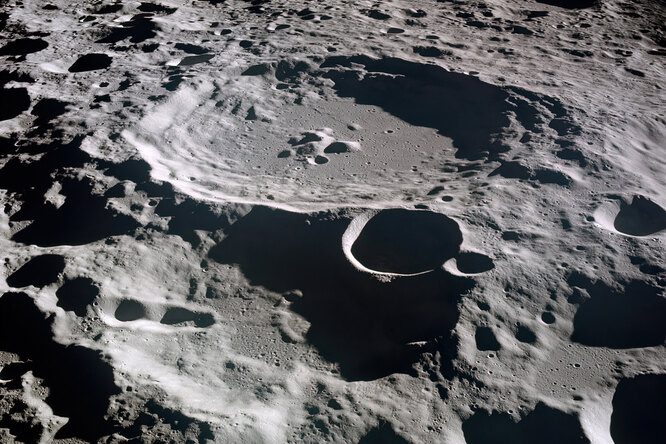
Eugene Shoemaker also proposed interpreting each of the highlighted units as “probably predominantly crushed rock” and “likely volcanic flows.” The scientist even added hypothetical geological sections to the map, indicating which structures could lie beneath the surface to depths of several kilometers.
Shoemaker collaborated with two colleagues to publish a more detailed map of the same area in 1967. They used photographic images taken by ground telescopes, supplemented by visual observations made with the 24-inch refracting telescope at Lowell Observatory in Flagstaff, Arizona. The first author of this map was Harrison Schmitt, better known as Jack Schmitt, who was an astronaut on the Apollo 17 Lunar Module in 1972. He became the first qualified geologist to walk on the Moon.
The geologist’s maps are relevant in the 21st century
Geological mapping that Eugene Shoemaker took to a new level is still relevant in the 21st century, even for celestial bodies that are unlikely to be visited by humans in the near future. The U.S. Geological Survey refines these maps and applies the same method to any rocky planet or several smaller rocky or icy bodies. First of all, we are talking about asteroids targeted for missions.
American geologists have rock samples from the Apollo missions so they can expand their geological knowledge of the Moon. Geological maps and samples of rocks brought back by astronauts have provided important information about the Moon’s history. However, some remain unstudied even after 50 years.
The Shoemakers discovered the comet Shoemaker-Levy 9
Upon his return to the California Institute of Technology in 1969, Eugene Shoemaker began systematic searches for near-Earth objects. As a result, several families of such asteroids were identified, including the Apollo asteroids. Shoemaker advanced the idea that sudden geological changes could result from asteroid impacts and that these impacts are recorded over many geological periods. Prior to his research, astroblemes were thought to be remnants of extinct volcanoes, even on the Moon.
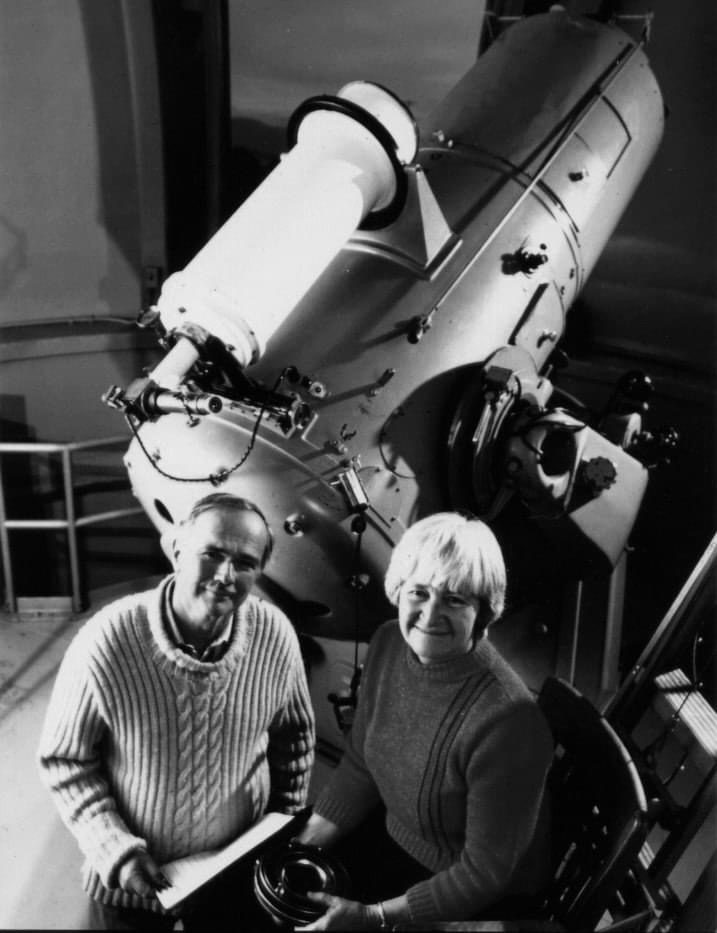
In 1993, Eugene, together with his wife and astronomer Levy, discovered the comet Shoemaker-Levy 9 using an 18-inch Schmidt camera at Palomar Observatory. This comet became so famous because it was the first time in human history that a planetary collision could be witnessed. The Shoemaker-Levy comet collided with Jupiter in July 1994. As a result of the impact, a chain of massive crater “scars” appeared on Jupiter’s surface.
Most of Shoemaker’s research was focused on searching for several previously unnoticed or unidentified impact craters worldwide.
The ashes were buried on the Moon
Shoemaker died on July 18, 1997, during an expedition as a result of a head-on collision in Australia. His wife sustained serious injuries in the accident. Eugene was honored to visit the Moon posthumously: his ashes were delivered to the moon by a space probe.
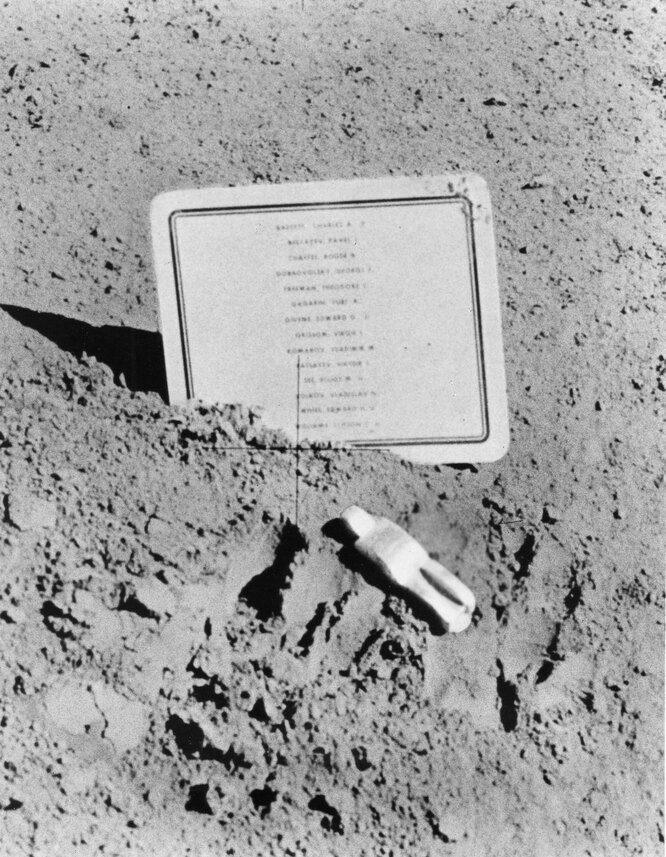
Lunar Prospector in the capsule was designed by Carolyn Shoemaker. At her request, NASA commercially delivered cargo for the first time, thus the Geologist’s ashes were the first private delivery to the lunar surface. The capsule containing Shoemaker’s ashes was made of polycarbonate and had a brass-foil tape wrapped around it depicting Barringer crater and Comet Hale–Bopp. This is the last comet observed by the Shoemakers together. A quote from “Romeo and Juliet” was written on the capsule:
“When he shall die, take him and cut him out in little stars, and he will make the face of heaven so fine that all the world will be in love with night and pay no worship to the garish sun.”

The spacecraft with precious cargo launched on January 6, 1998, from Cape Canaveral, Florida. After long lunar exploration, on July 31, 1999, a portion of Eugene’s cremated remains was buried near the south pole of the Moon. This made him the first and so far only person to be buried in such a way.
Personal life
On August 17, 1951, Eugene married Carolyn Spellman. Carolyn was born in Gallup, New Mexico. She earned a degree in history and political science from Chico State College. Before meeting Eugene, she had never been interested in geological subjects. However, she had taken a full course in geology in college, which she found quite boring. The couple maintained a “geological” connection while they were on a two-week geological field trip to the Colorado Plateau. Later, she wrote that Eugene’s stories about geology turned “this boring subject” into an engaging activity and “an exchange of knowledge.”