
Tuberculosis, with its bloody cough and tearing, painful lungs, has become a human problem, for it has taken more lives than any other disease. Some people died within days, while others could live for years. The disease has spared no one, taking the lives of such prominent figures as Lord Byron, Frederic Chopin, the Brontë sisters and others.
It was a common belief that intelligent and talented people were especially vulnerable to such a disease. So, I-los-angeles will tell you more about this particular epidemic of the first half of the 19th century and about Dr. Henry Stehman, who helped the townspeople to fight it.
The Tuberculosis outbreak. The background
Since the mid-1850s, tuberculosis has been the cause of high adult mortality in the United States. Possible causes included overpopulation and the industrial revolution, resulting in unsanitary living and working conditions. The epidemic had been going on for decades, necessitating decisive action.
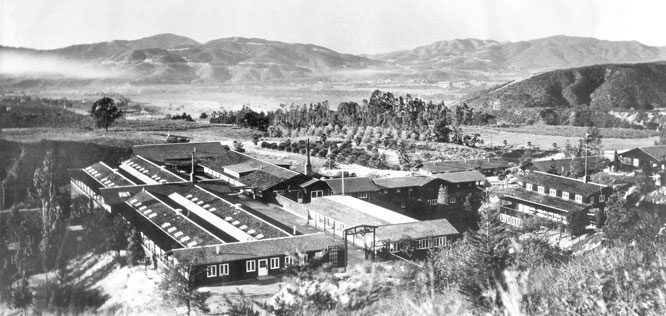
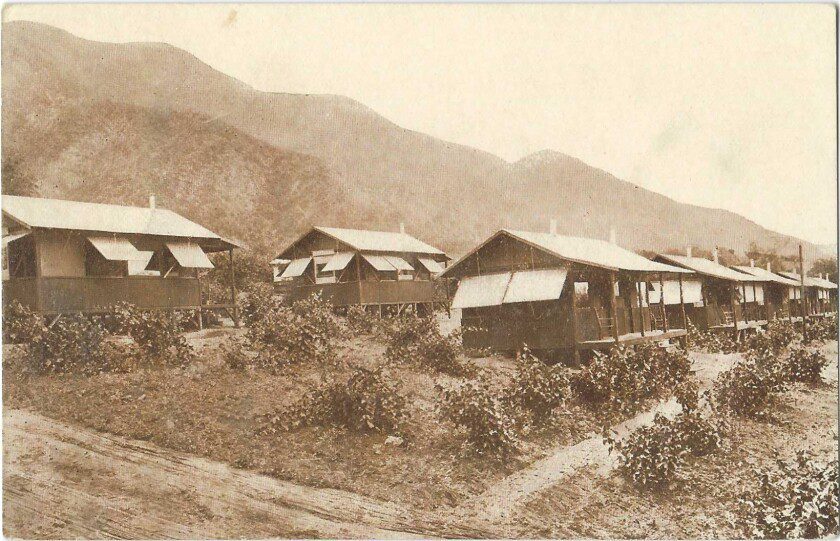
A tuberculosis hospital was built on the north side of Lincoln Avenue, on what was once the vineyard of the Giddings family, the founders of Mountain View Cemetery. So, in 1911, the La Viña Sanatorium opened, helping tuberculosis patients for decades.
Such places would mean nothing without qualified physicians. At that time, such a specialist was Dr. Henry Stechman, a Chicago physician whose role is worth telling us more about.
The doctor who has treated and survived tuberculosis himself
Indeed, the doctor, originally from Chicago, barely survived tuberculosis himself. In 1899, he moved to Pasadena, a city in Los Angeles County, California, as it was advertised as a place for those who had recovered and overcome tuberculosis. That could be explained by the sunny climate and dry air. After the unpleasant symptoms and the disease itself receded, he started treating others.
At that time, Dr. Stehman became acquainted with the region’s leader, Hazard Halstead. Together with another Chicago physician, Dr. Norman Bridge, they led a fund-raising effort to build the sanatorium. The facility had 17 rooms in 1909, with another 36 rooms opening two years later.
It is known that the first cottage was financed by the Blackers (Robert R. Blacker House). The second cottage was financed by Jared Torrance, the city’s founder. Among other benefactors were the names of Alexander Fleming, James A. Culbertson and the Dohenys.
La Viña Sanatorium has become one of the best sanatoriums for its clean air, recreation and healthy food. At the beginning of the 20th century, for example, there were at least five tuberculosis sanatoriums in Altadena, Los Angeles County. But what made La Viña stand out? The institution in question was the largest and most long-lived.
Life in the tuberculosis sanatorium
Both adults and children were treated in the institution. For example, after World War I, disabled veterans were treated for tuberculosis. There were also patients whose lungs had been damaged by gas attacks during the war.
Here, just imagine a place with horses, chicken coops, cattle, vineyards, orange and grapefruit trees, plus its own post office. They were selling all the gifts and using the profits to cover expenses and to feed the patients. That was the way historian Cecilia Rasmussen portrayed life at La Viña Sanatorium.
The difficulty, however, was that income levels were dropping every year, although some patients helped with physical labor to strengthen their muscles. They could pave the sidewalk or do gardening. The staff at the sanatorium encouraged them to try their hand at arts and crafts since patients could also sell the items they created later on their own. Cecilia Rasmussen noted the average cost of service per day to the institution was USD 1.41.
Was this method of treatment successful? For many patients, fleeing the crowds and living a healthy life was beneficial. But the mortality rate in 1900 was still, according to statistics, 194 people per 100 thousand patients died. If you compare that to today’s rates, it’s 0.2 deaths per 100 thousand patients. The data was obtained from the American Lung Association.
Hope for a cure
La Viña Sanatorium, just like Dr. Henry Stehman, was a hope for healing. The patients of the tuberculosis sanatorium were people from all walks of life. Often they were poor or disadvantaged people who could not pay the total cost, but 50% was covered by donations from benefactors. Interestingly, Dr. Stehman himself worked for free from the beginning.
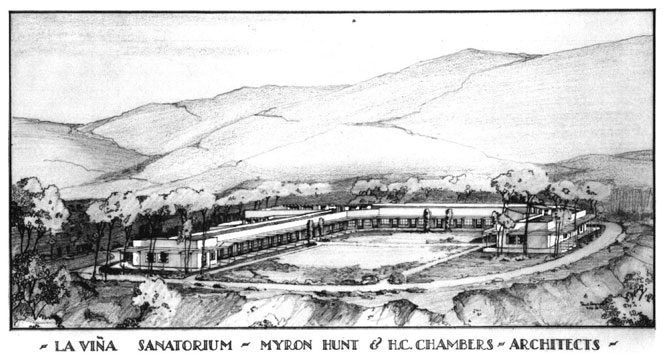
A horrific event in the sanatorium’s history was a fire in 1935 that engulfed not only Las Flores Canyon but also the tuberculosis facility. The only building that survived was the administration building, while everything else was destroyed by the devastating fire. The institution received USD 69 thousand in insurance, with an additional USD 178 thousand generated through fundraising. All those funds were applied toward the construction of a new 51-bed hospital designed by architect Myron Hunt.
The rooms of the new sanatorium were well ventilated and overlooked the courtyard, providing patients with a sense of care and freedom. The building was one of the first in all of California to be designed with seismic safety in mind.
In 1945, the research center by Charles Cook Hastings was placed on the premises of the new tuberculosis sanatorium. He died of tuberculosis, but his son opened the facility where twenty beds were allocated to provide free treatment and care for veterans. The research center began to study the effects of nutrition on tuberculosis. It may surprise the modern reader, but the impetus for a healthy lifestyle, namely healthy eating, was the tuberculosis epidemic.
Eighteen years after the opening of the research center and the new sanatorium, the institutions were closed. The reason was the development of treatment for the disease, so they no longer needed separate, specialized facilities. By the 1980s, the number of patients had decreased significantly, as had the mortality rate from tuberculosis. Home isolation and antibiotics supplemented by a healthy diet became effective treatments.
What happened to the territory of La Viña Sanatorium?
The closed institution later merged with the Huntington Hospital in Pasadena. Thus, La Viña Wing was opened, the cost of which was estimated at USD 20 million. A vast area of 160 acres of land, almost 65 hectares, that was left vacant was sold to a developer. The immense territory was a cause of conflict for decades and then split Altadena into factions. These are the suggestions that were voiced at that time:
- To create an archive for the writings and documents of L. Ron Hubbard.
- To create a nature preserve.
- Construction of residential development was the third option that finally won out. In 1993, construction work began on 272 homes. The sales commenced in 1998.
It is worth adding that the townspeople have long fought against the idea of building a closed complex and private school on the site of the tuberculosis sanatorium, but they lost. The Los Angeles County Board of Supervisors has approved the idea of replacing empty structures with residences on the hillside.
Dr. Henry Stemahn, what was the fate of the eminent doctor?
He was popularly nicknamed the “Captain of Death”. He made a significant contribution to the process of disease containment. No matter the status or class of the person, he helped and treated them.
Formerly an obstetrician/gynecologist, he had once left a lucrative practice in Chicago to move to Pasadena. Recovering his own health and learning about illness became his obsession.
Henry Stemann died in 1918 at the age of 66. He was buried in Mountain View Cemetery. His friend and colleague Dr. Norman Bridge described the doctor as a gifted physician, philanthropist and responsible citizen. La Viña Sanatorium was the grandest work he ever did. He fulfilled a noble dream to create an institution for the sick and disadvantaged.