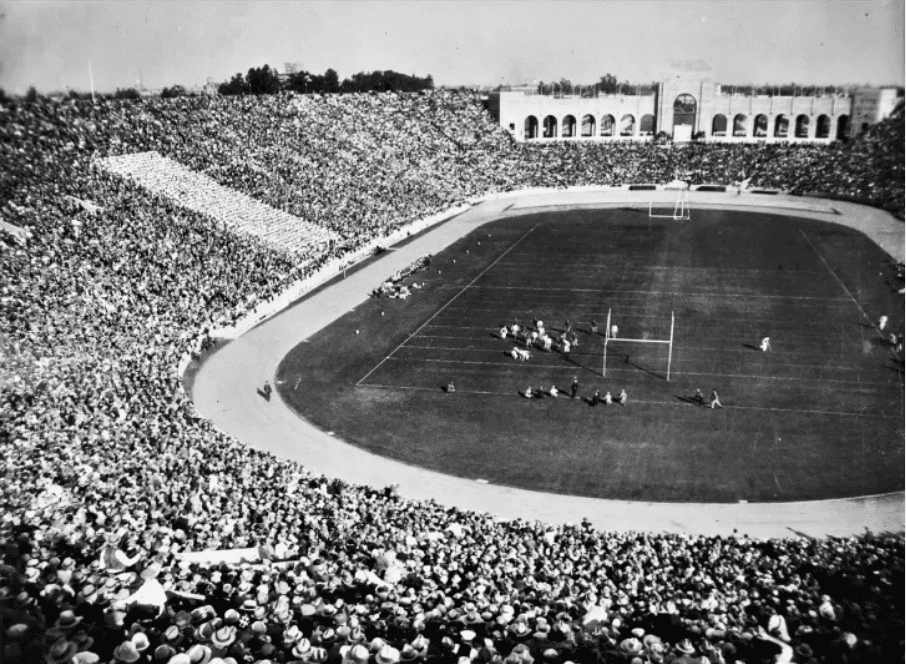

Every city has certain buildings that are symbols of public pride. One such place in LA is The Los Angeles Memorial Coliseum (abbreviated as the L.A. Coliseum). i-los-angeles tells more about its history and football matches.
The Los Angeles Memorial Coliseum
This place deserves special attention. It will be the first stadium that hosted the Summer Olympics three times (1932, 1984 and 2028). In addition, the multi-purpose stadium in the Exposition Park area of LA has been recognized as a National Historic Landmark. It happened the day before the opening of the 1984 Summer Olympics.
Here are some interesting facts related to the L.A. Coliseum:
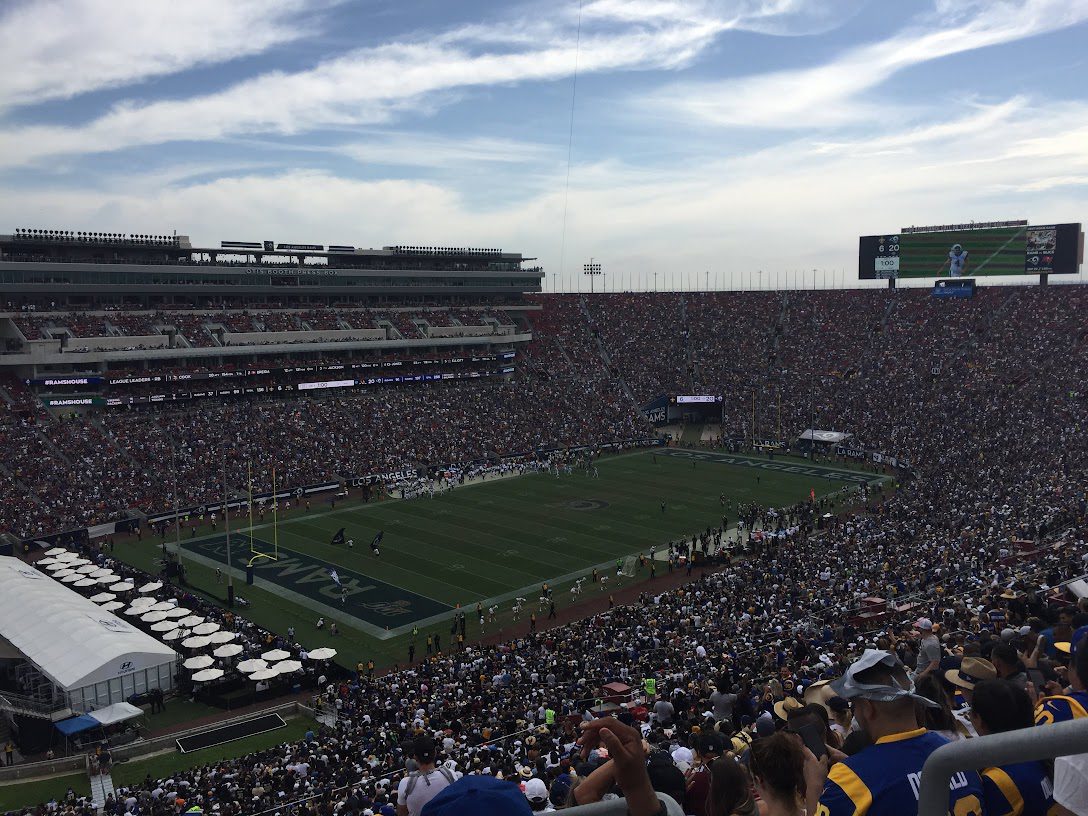
- the capacity before major modernization was 93,607 seats and now it comprises 77,500 seats
- it is the home of the University of Southern California Trojans football team
- the Busch Light Clash competition for the American company NASCAR has been held on its territory since 2022
- it was the home of the Los Angeles Rams of the National Football League (NFL) from 1946 to 1979 and from 2016 to 2019
- a two-year rebuilding of the stadium was completed in 2019. The $315 million project included replacing the seats, adding luxury boxes and club rooms. The project was financed by the university and integrated architectural firm DLR Group
- the object was used as the main concert venue, as well as a place of religious revival. America’s 200th anniversary was celebrated here in 1976.
History
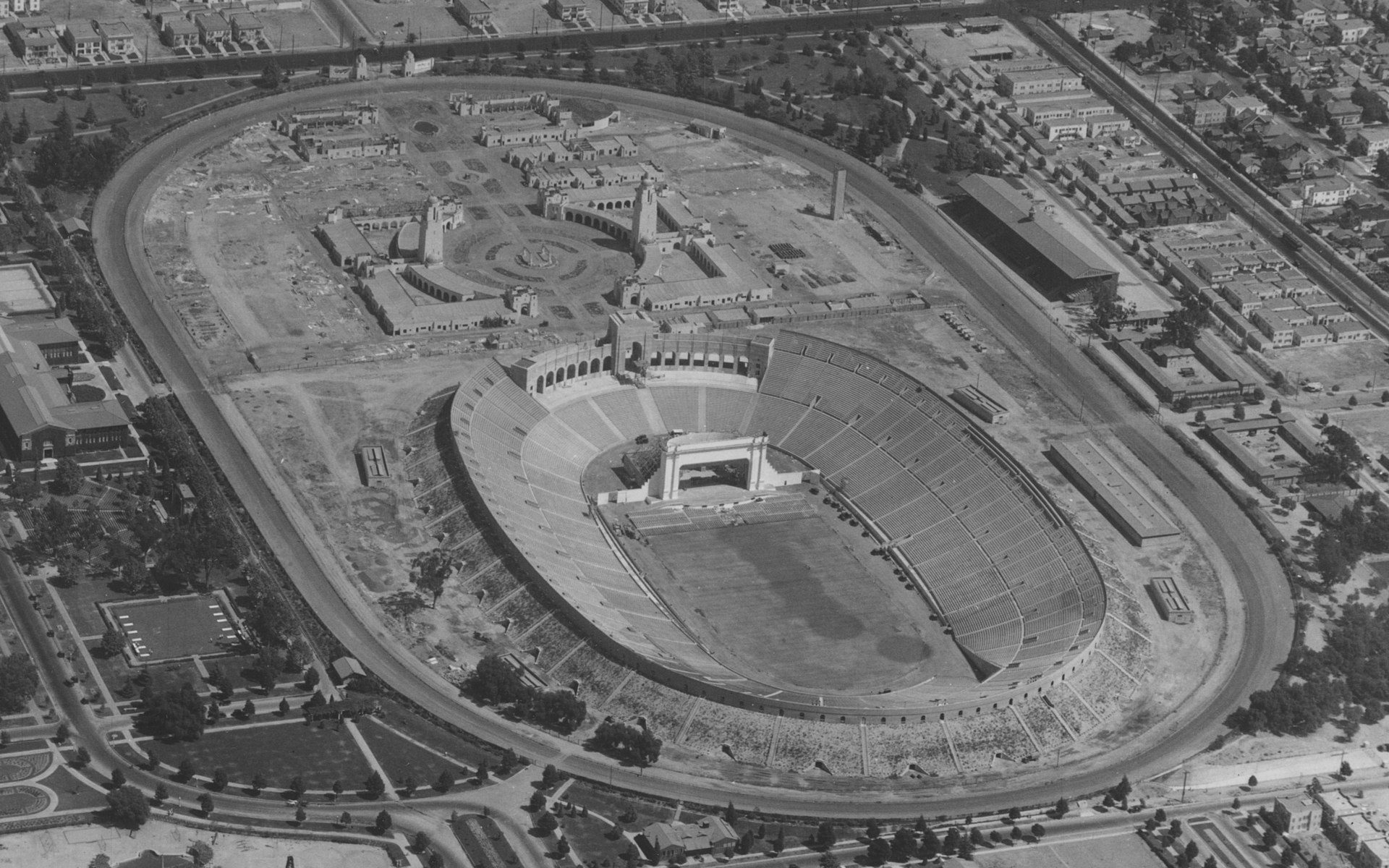
The groundbreaking ceremony was held on December 21, 1921. In 1923, all the works were completed. The multi-purpose stadium became a memorial to the veterans of the First World War and was rededicated to all US war veterans in 1968. At the time of its opening, it was the largest stadium in Los Angeles. Its cost was estimated at almost $1 million. John and Donald Parkinson, a well-known architectural local company of father and son, participated in the design.
They also designed Los Angeles City Hall, Union Station, the popular store Bullock’s Wilshire (now Southwestern Law School) and other famous buildings.
The first football matches at the stadium
In October 1923, the stadium hosted its first major sporting event, a football game between the USC Trojans and Pomona College. The Trojans won. It was a highly anticipated event that gathered more than 20,000 fans. Everyone wanted to see the doubleheader that the USC freshman team opened against the Santa Ana High School team. After that, the Trojans, led by coach Henderson, beat Pomona with a score of 23-7.
The Trojans demonstrated how comfortable it is to play at home. In 1928, this team won the first of eleven national championships. The team has called The Los Angeles Memorial Coliseum home ever since.
Professional football appeared in the stadium in 1946, when the team Los Angeles Rams (former Cleveland Rams) moved west and played home games in the largest stadium in Los Angeles until 1979.
Why was football so popular?
Starting in the 1920s, football in Los Angeles became more and more popular. The city experienced rapid growth during this period. The role of sports culture grew along with it. It is possible to single out a few more important points related to football in those years.
- Many amateur and professional teams appeared. This led to increased competition between the teams, as well as interest from the spectators.
- Mass media (newspapers, radio) played an important role in the popularization of football in the city as they covered current information.
- Football in those years was not only entertainment but a tool for uniting society. The Los Angeles Memorial Coliseum hosted important social events.
- It is worth mentioning the social events that took place at the stadium. For example, in 1934, Cinco de Mayo was celebrated for the first time at the stadium. This is a holiday in honor of the Victory Day of the Mexican army over France in 1862. In the US, this holiday has become a reminder of Mexican culture and heritage. It gained particular publicity in areas with a large Mexican-American population. The event combined sports and carnival events, with the participation of athletes and artists of Mexican origin.
Another example is the first Summer Skating Carnival exhibition at an outdoor football stadium, which took place in 1936. A ticket could be purchased for only 30 cents. The guest of the event was the world-famous figure skater and Hollywood actress Sonja Henie. She was called the Ice Queen of Norway.

Describing football in the 1920s and its subsequent development, it can be noted that the public’s attitude towards it was extremely positive. This sport has become an important part of the city’s life and its culture.