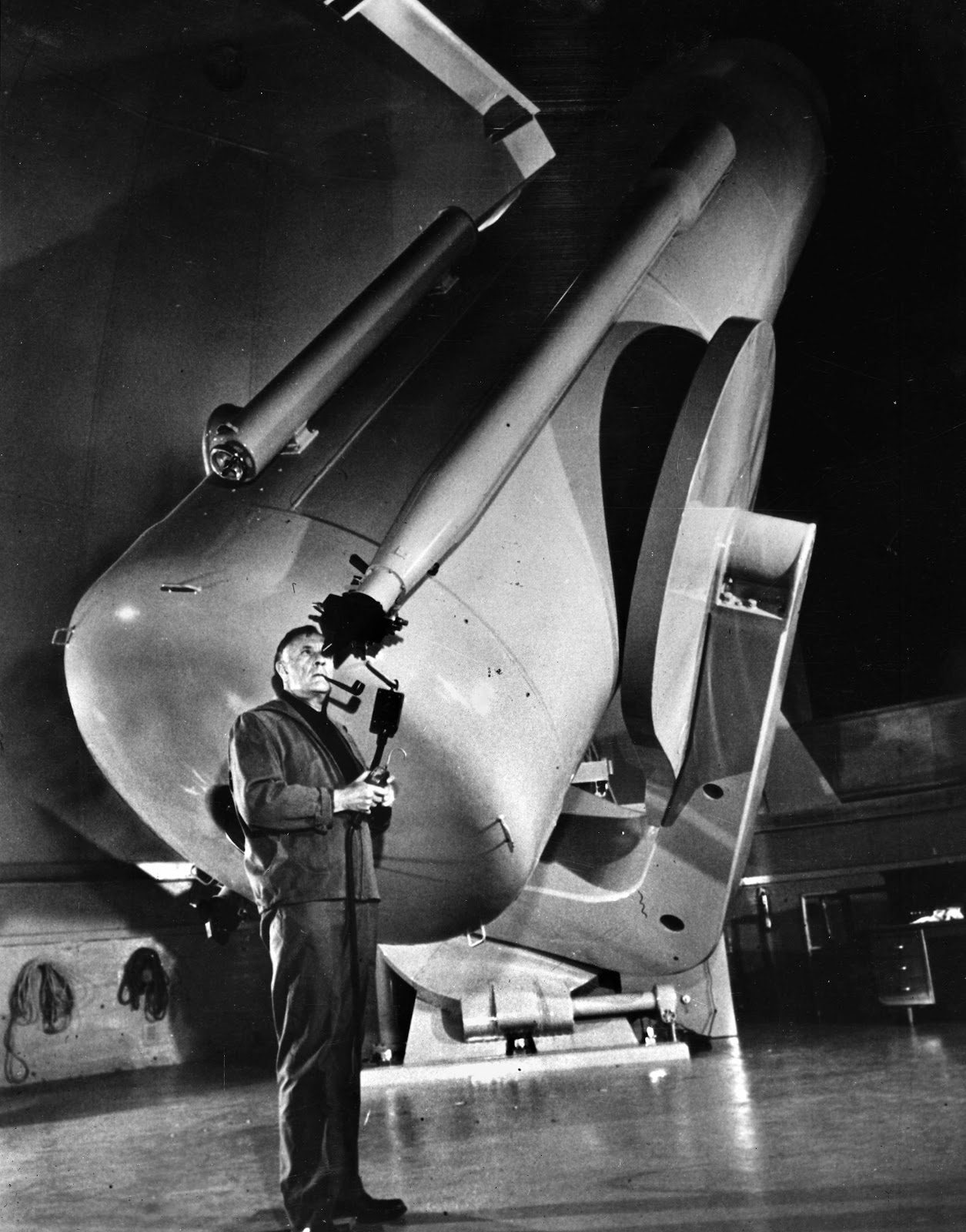

Edwin Hubble is one of the most reputable astronomers of the 20th century. A crater on the Moon and asteroid 2069 are named after him. In 1990, the most powerful telescope launched into space orbit was named in his honor. It significantly expanded the capabilities of astronomers. Find out the life story of Edward Fredkin, a scientist who researched artificial intelligence. Next on i-los-angeles.
Biography
American astronomer E. Hubble was born in a house on his grandparents’ dairy farm in Marshfield, Missouri, on November 20, 1889. The family’s one-story home was heated by a single fireplace and lit at night with kerosene lamps.
Edwin’s father, John, was a salesman in the insurance business. His mother, Virginia, ran the Hubble household, which included raising eight other children. The boy’s father was successful in his work and was able to give Edwin and his siblings a normal childhood. The children grew up in a middle-class family. At the end of 1899, the Hubble family first moved to Evanston, Illinois, before finally settling in nearby Wheaton.
As a child, Edwin learned to play the mandolin and loved to read books, especially Jules Verne’s stories. On his grandson’s eighth birthday, the boy’s grandfather built him a basic telescope. Edwin stayed up all night looking through the telescope. It was there that he developed a passion for astronomy and loved watching meteor showers from his backyard. Two years later, in June 1899, Edwin spent the entire night with friends to see a total lunar eclipse.
The future scientist’s friends said that this eclipse may have sparked the guy’s desire to become an astronomer. By the time he was twelve, he was so knowledgeable about astronomy that a letter he wrote to his grandfather about the planet Mars was published in the local newspaper. The boy also excelled in his school studies in science, algebra and Latin.
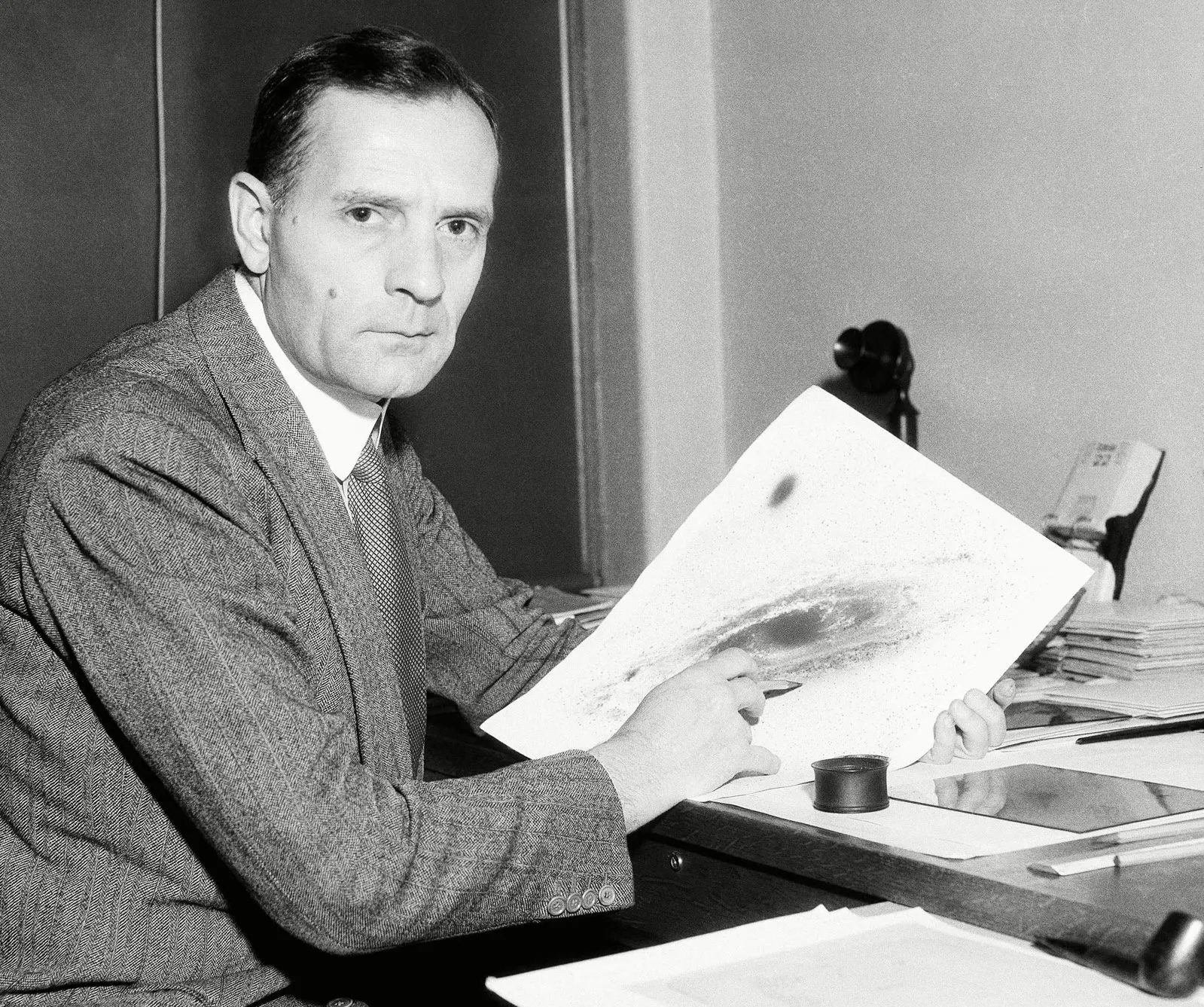
After graduating from high school at the age of 16 in 1906, Edwin earned a scholarship to the University of Chicago (UChicago). There, he studied math, astronomy and natural science. He worked for a year as a laboratory aide to the university’s prominent physicist, Robert Millikan. The man then spent the next three years in England as one of the first Rhodes Scholars at the Queen’s College, Oxford. He pursued a law degree there, graduating with a master’s degree in 1913. During his winter and summer vacations, the astronomer took long trips across the channel to the European continent, where he traveled to Spain and Germany.
In the summer of 1913, while Edwin was still in England, his father John died. He returned home to care for his mother and younger siblings. After spending a year teaching high school physics and coaching a basketball team, the man re-enrolled at UChicago to earn a doctorate in astronomy. For the scientist, astronomy was his calling.
Here, the astronomer had the opportunity to attend the American Astronomical Society conference. He was able to meet a number of top astronomers from around the country, incl. V. M. Slipher of the Lowell Observatory, who was working on obtaining spectrographs and radial velocities of spiral nebulae. This presentation inspired Edwin to dedicate himself to the study of these spiral nebulae.
After writing his dissertation, Hubble was granted his PhD in astronomy in 1917. The man met George Hale, the director of the observatory, who offered him a job after graduation. The day after Edwin passed his exams, he wrote to Hale about the job offer: “Regret cannot accept your invitation. Am off to the war.” Only at the age of 30, Hubble was discharged from military service and returned to the US to take the position offered by G. Hale at the Mount Wilson Observatory (MWO).
Personal life
During his high school and college years, Edwin had few romantic stories, except for the summer vacation before his junior year of college at UChicago, where he fell in love with a girl named Elizabeth. But she eventually ended the relationship when she realized that she could never hope to compete with the astronomer’s love of Mars and the stars.
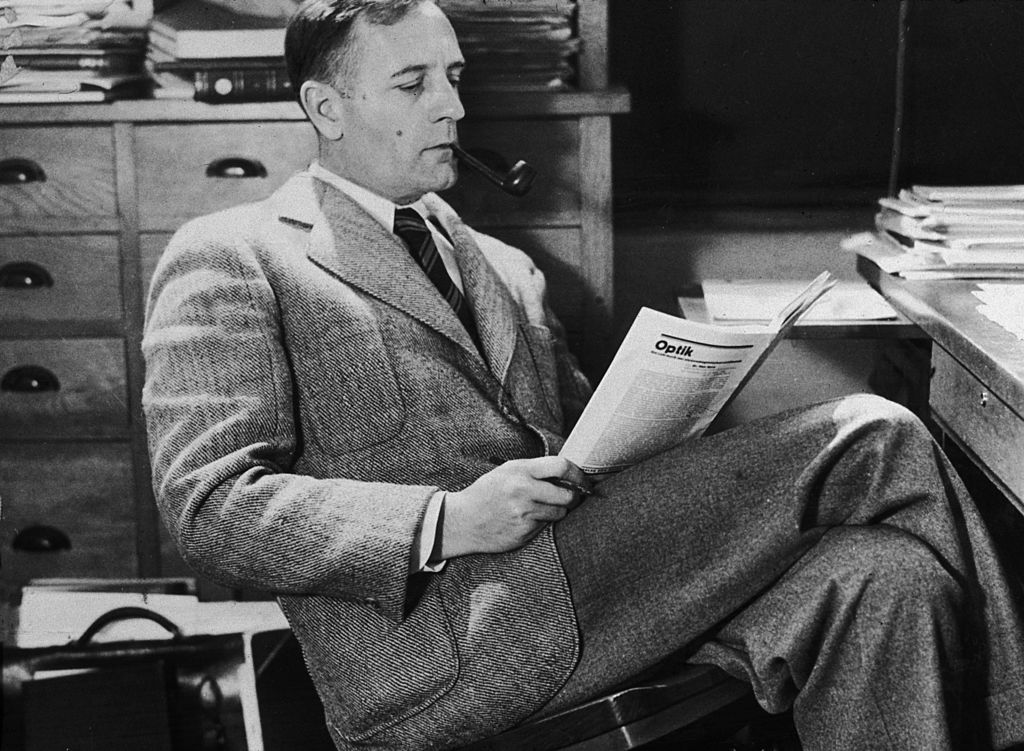
In late 1923, E. Hubble began dating Grace (Burke) Leib of Pasadena, whom he had met several years earlier during a tour of the MWO. Edwin had also previously spent time with Grace on a total solar eclipse expedition. Grace came from a wealthy family, was a graduate of Stanford University and found the scientist’s work interesting. She was knowledgeable about art, music and architecture. The couple enjoyed long hikes and other outdoor activities in the mountains of California. In February 1924, the couple married.
The scientist had free time, so the couple was active in social events in Southern California. They became friends with a number of Hollywood stars, philanthropists and California intellectuals, incl. Frank Capra, Clark Gable, Charlie Chaplin, the Marx Brothers, Howard Hughes and Walt Disney. They also maintained friendships from Edwin’s time as a student in Europe with a number of famous British astronomers, novelists and playwrights, incl. Arthur Eddington, Fred Hoyle and Aldous Huxley. During Albert Einstein’s visit to the MWO, the famous physicist and his wife spent time at Hubble’s house.
A few years after the marriage, Grace became pregnant. While the astronomer was at the MWO, Grace miscarried and they lost their child. After that, Grace and Edwin never had any children and were happy with their life together.
Work at the observatory
While studying astronomy at UChicago, the scientist worked under the supervision of observatory director Edwin Frost and E.E. Barnard. He used the observatory’s 24-inch reflector and 40-inch refractor to photograph the nebula. Hubble wrote his doctoral dissertation, Photographic investigations of faint nebulae, during these studies. The man made his first discovery from this project, using a 24-inch reflector, that the brightness of the reflective nebula NGC2261 in Monoceros was variable. This nebula has since become known as Hubble’s Variable Nebula.
As part of his dissertation work, the man also studied nebulae located far from the Milky Way band, using a 24-inch reflector to photograph seven areas and spotted 512 new small nebulae. The astronomer measured their individual positions and described their shape, size and brightness.
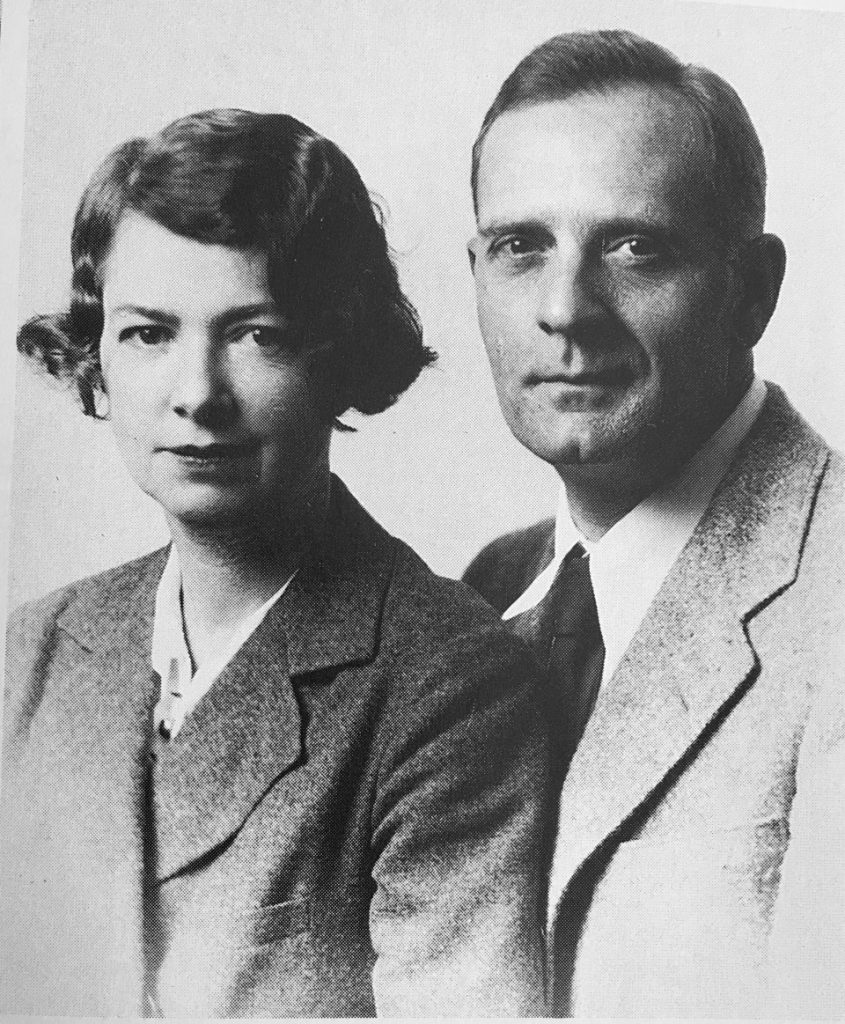
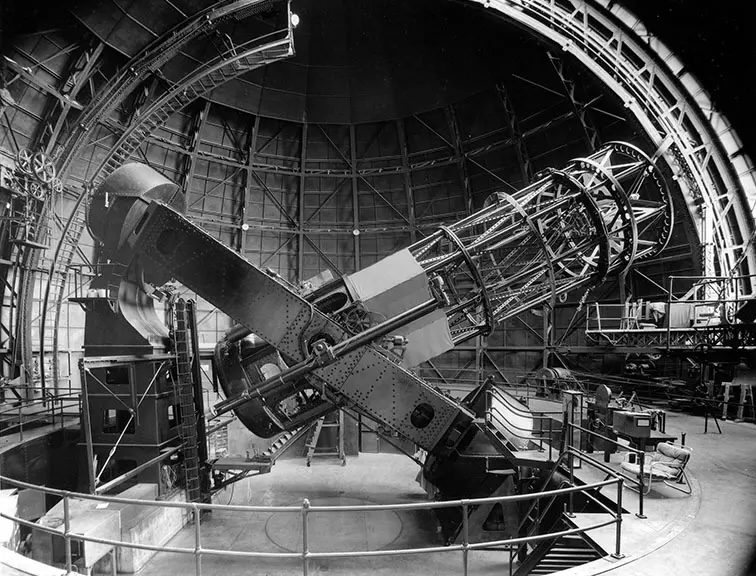
He was one of the first astronomers to use the new 100-inch Hooker telescope to study the spiral nebula. The scientist aimed to figure out if the spiral nebulae were simply distant, unresolved gas and stars in our own galaxy, or if they were external systems in the Milky Way. The astronomer observed these nebulae every night. As part of this work, Edwin also began to develop a system for classifying the nebulae he was studying. The man also quickly became known for his knowledge of the night sky and could describe the shape and location of hundreds of sky objects from memory.
Hubble was one of the first astronomers to use the completed 200-inch Hale Reflector at Mount Palomar Observatory. As part of the grand opening of the new 200-inch Hale Telescope at Palomar Mountain on January 26, 1949, the man was chosen to lead the first night of observations.
He successfully imaged a number of cepheids and several bright new objects in both spiral galaxies M81 and M101. The scientist continued to work with Milton Humason to further refine his redshift theory. On the evening of September 3, 1953, the astronomer made his last observation at the Palomar Observatory.
Hubble’s discovery
The scientist discovered several dozen cepheid variables in the Andromeda Spiral Nebula, as well as 35 variables in the Triangulum spiral of M33 and another 11 in Barnard Galaxy. The man used his own calibrated cepheid-based distance calculations of the Milky Way to determine that all of these other spiral nebula star distance variables, such as V1, are much larger than the Milky Way’s own accepted size of 300,000 light-years.
The scientist’s observations of additional cepheids in the Andromeda and Triangulum nebulae convincingly proved that they were too far away to be located inside the Milky Way and that the spiral nebula was actually external to the Milky Way. The first accurate distances to galaxies were finally determined by E. Hubble using cepheid variables.
Edwin ultimately addressed the long-standing issue of outer galaxies versus inner nebulae, settling the argument in favor of Immanuel Kant’s 1755 island universes.