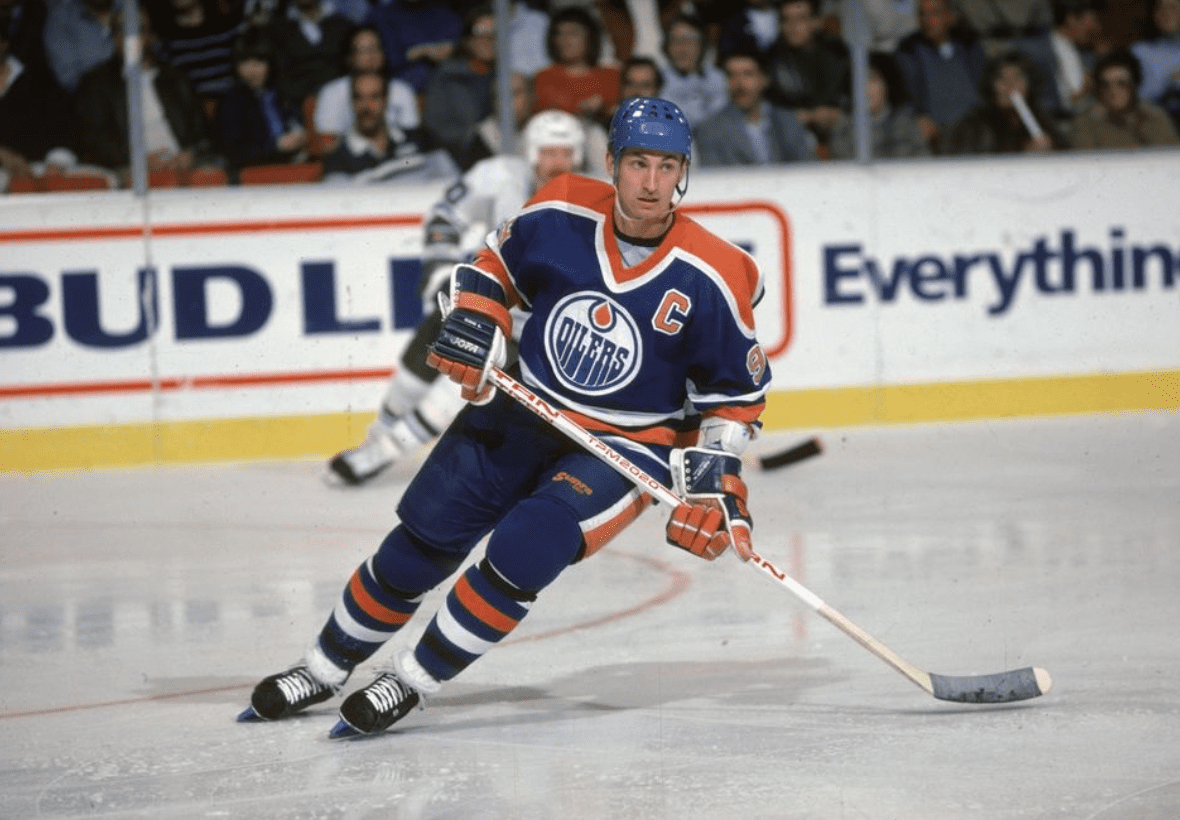

It’s a name that has become synonymous with hockey. He is called “The Great One”—a title that isn’t just a nickname, but a recognition of a phenomenal talent who changed the game forever. Over a professional career spanning more than two decades, he set dozens of records, most of which remain untouched. His vision on the ice, his technique, and his ability to anticipate the flow of the game made Gretzky a living legend and a symbol for an entire generation of athletes. Read more at i-los-angeles.
Biography
Wayne Gretzky was born on January 26, 1961, in the small Canadian city of Brantford, Ontario. From early childhood, he showed exceptional ability in hockey, learning to skate almost before he could properly walk. His father, Walter Gretzky, a former hockey coach and sports enthusiast himself, actively supported and nurtured his son’s talent, creating unique training conditions for him. Even as a child, Wayne was distinguished by his remarkably quick thinking on the ice, exceptional puck-handling skills, and an uncanny ability to predict his opponents’ moves. His teammates and coaches repeatedly noted his extraordinary intuition and vision for the game, which made him a formidable player even at a very young age.
Professional Career
Gretzky began his professional career in 1978 at just 17 years old. He signed a contract with the Edmonton Oilers of the World Hockey Association (WHA), becoming the youngest player in the league. His performance quickly captured the attention of the hockey community, and his unmatched skill helped the Oilers dominate the league.
In 1979, following the merger of the WHA and the NHL, Wayne Gretzky and the Edmonton Oilers moved to the National Hockey League (NHL). From the very beginning of his NHL tenure, he became one of the league’s brightest rookies, setting records for points scored by a first-year player. His game was a combination of incredible speed, precise passing and scoring, and an exceptional tactical mind.
NHL Career
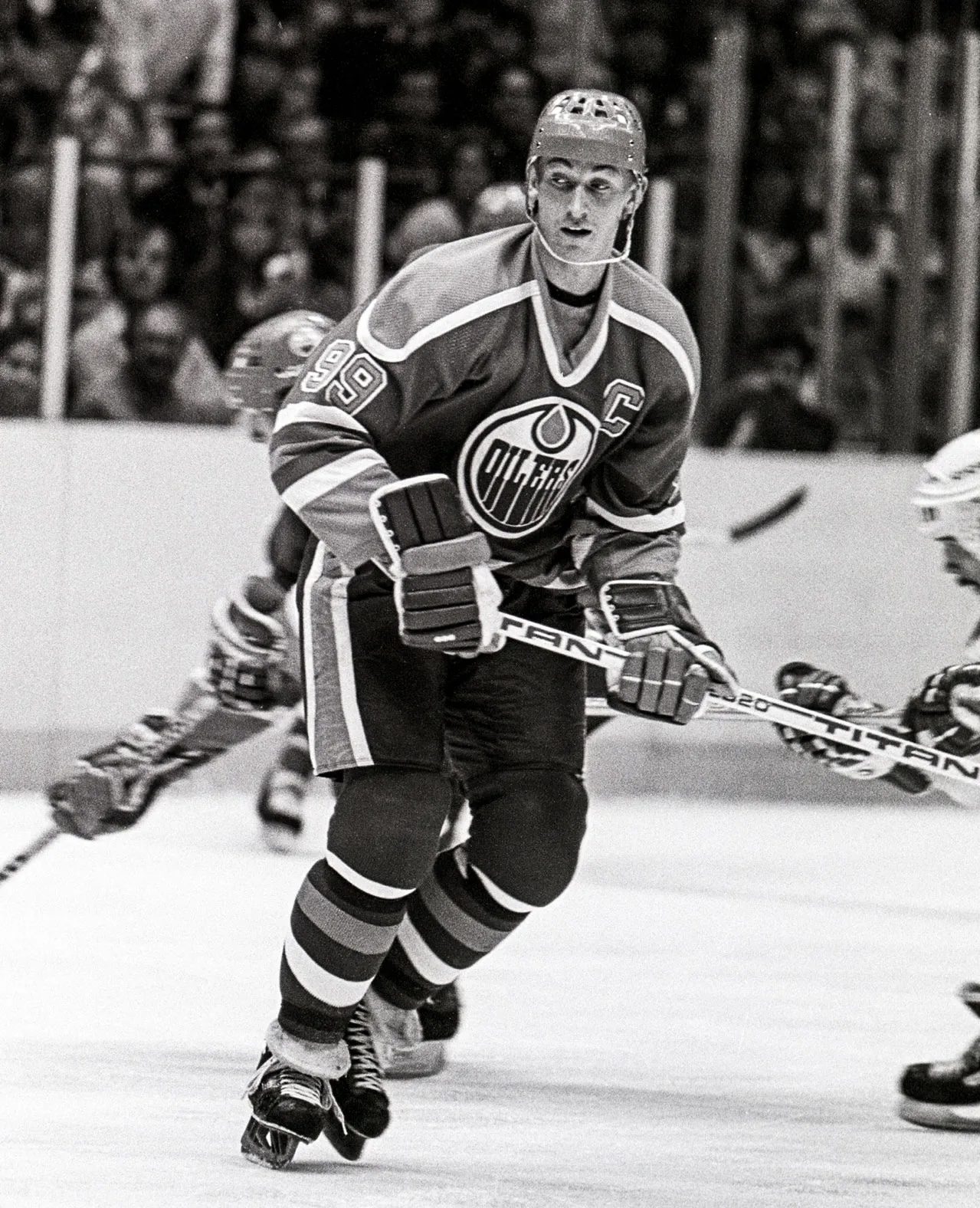
Wayne Gretzky made his NHL debut in the 1979-1980 season when the Edmonton Oilers joined the league after the WHA folded. In his early years, he became a sensation, winning the Hart Trophy (MVP) for nine consecutive seasons—a record that is unlikely to ever be broken. With the Oilers, Gretzky led the team to four Stanley Cups (1984, 1985, 1987, 1988) and became the symbol of the club’s dominance during that era. His play was characterized by incredible hockey sense, flawless vision on the ice, and the ability to make precise passes that opened up scoring lanes for his teammates.
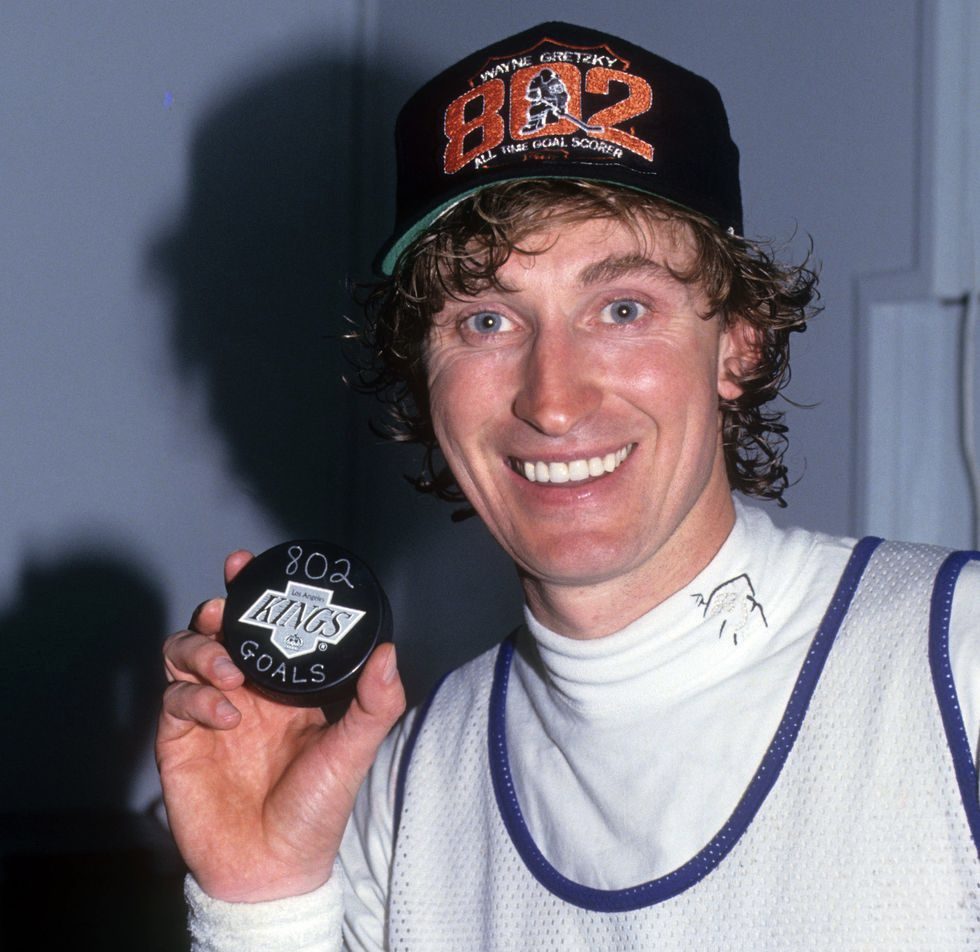
In 1988, he shocked the hockey world when he was traded to the Los Angeles Kings. This move was not only a turning point in Gretzky’s career but also a historically significant event for the growth of hockey in the United States, especially in California. The arrival of “The Great One” in Los Angeles dramatically increased interest in hockey in a region where the sport had previously been less popular. Gretzky became the face of the club and a primary factor in helping the Kings re-establish themselves as a top-tier team. His outstanding skill, charisma, and leadership drew in countless fans and inspired a surge of young athletes to take up the sport. With the Los Angeles Kings, Gretzky continued to perform at an incredible level. The highlight of this period was reaching the Stanley Cup Final in 1993—the first in the club’s history. Although the Kings did not win the trophy, their success was a landmark moment for the California hockey community. During his time in Los Angeles, Gretzky not only improved his personal stats but also played a crucial role in popularizing hockey for a wider audience, helping to expand the sport’s footprint in the U.S.
After his time with the Kings, Gretzky had a brief stint with the St. Louis Blues before playing his final seasons with the New York Rangers, where he remained one of the league’s top players. Over 20 seasons in the NHL, he set 61 official records, including the most career points (2,857), assists (1,963), and goals (894). These achievements made him not just a sports legend, but the symbol of an era in hockey.
Recognition
Wayne Gretzky became the symbol of the highest level of excellence in hockey. During his career, he won the Art Ross Trophy as the NHL’s leading scorer 10 times and the Hart Trophy as the league’s most valuable player 9 times. His nickname, “The Great One,” was earned not just through his stats, but also through his charisma, sportsmanship, and ability to elevate his team to new heights.
Gretzky set more than 60 official NHL records, including the most career assists, most points in a season, and most career total points. His playing style combined intelligence, quick thinking, and technical mastery, allowing him to stay one step ahead of his opponents.
Upon his retirement in 1999, his jersey number, 99, was retired league-wide by the NHL—an unprecedented honor that underscored his immense impact on the sport.
Life After Retirement
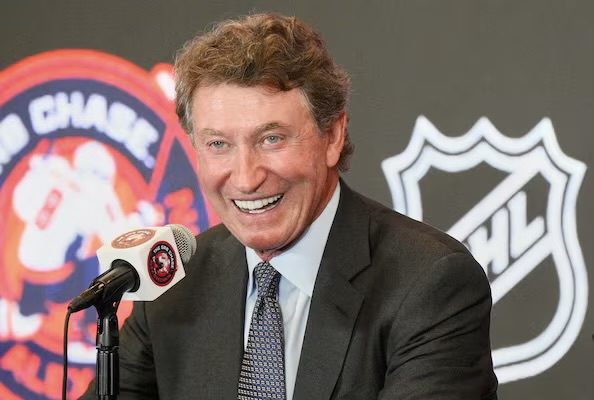
After retiring from his professional career in 1999, Wayne Gretzky was immediately inducted into the Hockey Hall of Fame. Gretzky was one of six players voted to the International Ice Hockey Federation’s (IIHF) Centennial All-Star Team. In 2000, he was also inducted into the IIHF Hall of Fame, and in 2012, he received the Order of Hockey in Canada, the nation’s highest honor for contributions to the sport’s development.
At the 2002 Winter Olympics in Salt Lake City, Gretzky served as the executive director for the Canadian men’s national ice hockey team, which went on to win the gold medal. This victory became a highlight of his post-playing career.
In 2000, Wayne became a part-owner of the NHL’s Phoenix Coyotes and, after the 2004–2005 NHL lockout, took over as the team’s head coach. However, he stepped down in 2009 following the club’s bankruptcy and relinquished his ownership stake. In 2004, Gretzky was also inducted into the Ontario Sports Hall of Fame.
One of Gretzky’s most memorable moments was lighting the Olympic cauldron at the 2010 Winter Olympics in Vancouver, symbolizing his status as a preeminent sporting legend.
In October 2016, he returned to the Edmonton Oilers as a minority partner and vice-chairman of the parent company, Oilers Entertainment Group. Later, in 2021, Gretzky retired from his administrative role and became a lead analyst for the NHL on Turner Sports (TNT), where he continues to share his experience and knowledge with fans around the world.
Personal Life
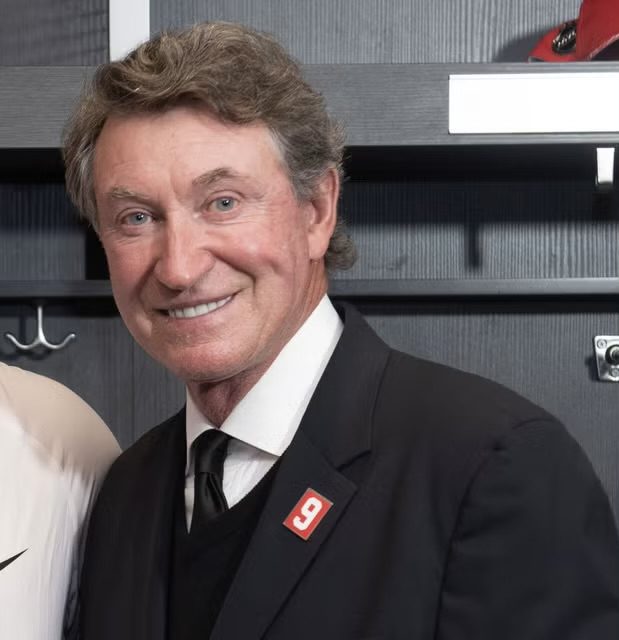
Wayne Gretzky is married to the well-known American actress Janet Jones. The couple married in 1988, and their marriage is considered one of the most enduring in the worlds of sports and entertainment. Together, they have five children and place a strong emphasis on family values and mutual support. Despite constant media attention, Gretzky and Jones have always managed to protect their personal privacy, avoiding major media scandals. Wayne often emphasizes that his family is his most important source of support and inspiration in both his professional and personal life.
In addition, Gretzky is actively involved in charity work. He supports numerous organizations that help children and young people develop their athletic talents and is involved in projects promoting a healthy lifestyle. Wayne gives special attention to initiatives aimed at getting children involved in hockey, particularly in small towns and rural regions of Canada. Gretzky regularly participates in charity games and organizes his own events to raise funds for various social projects.