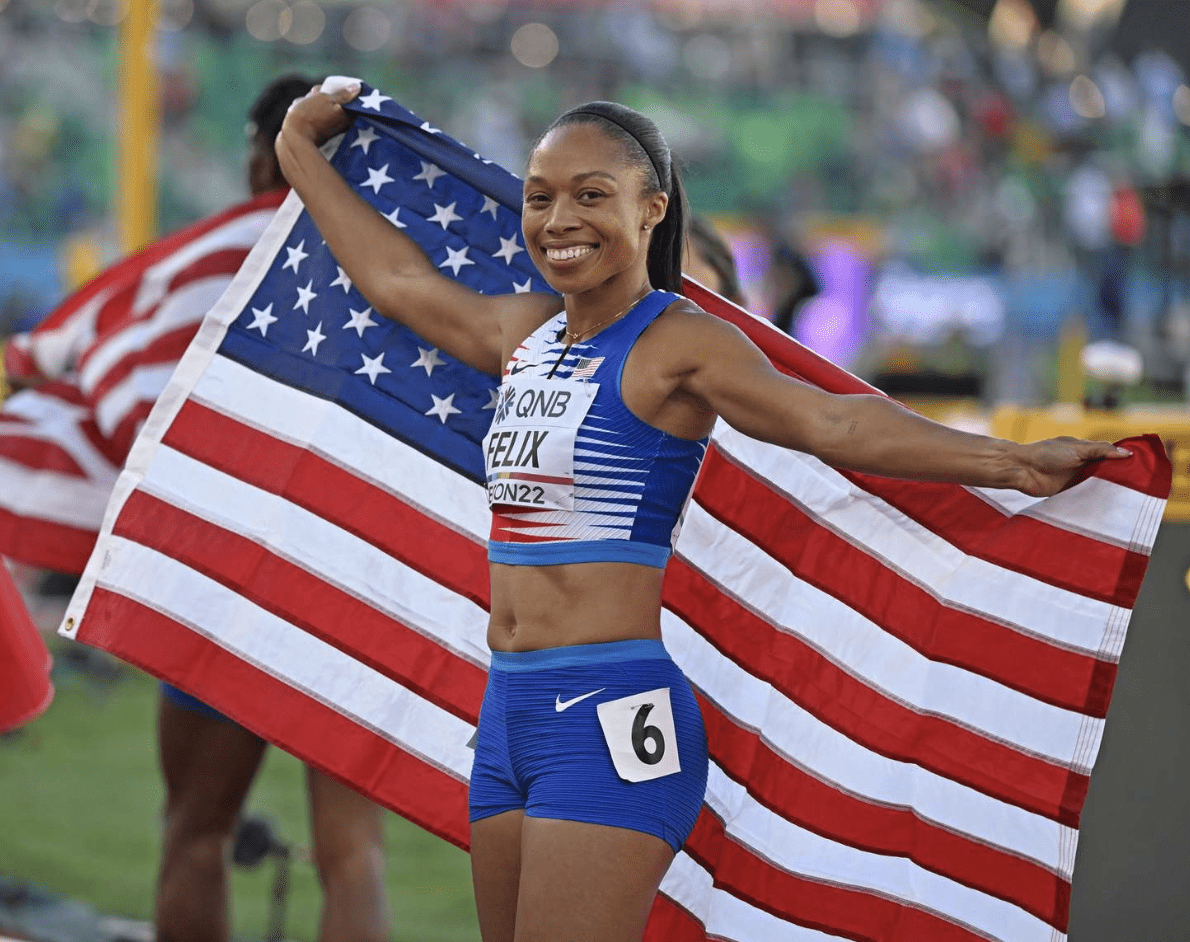

She is one of the most decorated track and field athletes of the 21st century, with a career that exemplifies not only athletic greatness but also personal strength and a commitment to her principles. She left an indelible mark on the history of global sports, winning a record number of Olympic and World Championship medals while also becoming a powerful voice for female athletes in the fight for equality. Read more at i-los-angeles.
Biography
Allyson Felix was born on November 18, 1985, in Los Angeles, California, to a family that valued education, faith, and hard work. Her father, Paul, was a seminary professor and pastor, and her mother, Marleen, was an elementary school teacher. This family environment fostered the determination and discipline that would later define the future champion. As a child, Allyson wasn’t immediately certain that sports were her calling. Although she was known for her speed during games with friends, her main focus was on academics and school projects. Her family already had a sports role model—her older brother, Wes Felix, who competed in track and field in college and later became a U.S. champion in the triple jump. He was one of the key inspirations for Allyson to try her luck on the track.
Her serious training began at Los Angeles Baptist High School. There, she was guided by coach Gino Keram, who immediately noticed her incredible natural speed and fluid movement. By age 15, Felix was already winning local competitions. The year 2003 was a turning point: at 17, she won a silver medal in the 200 meters at the World Junior Championships in Kingston, Jamaica. This achievement earned her recognition in athletic circles and opened the door to the international stage. Shortly after, Allyson signed a professional contract with Adidas, becoming one of the few athletes to turn pro right out of high school, forgoing NCAA competition.
Triumph on the World Stage
Allyson Felix made her Olympic debut in 2004 in Athens at just 18 years old. She captured the silver medal in the 200 meters, finishing second only to the seasoned Jamaican star Veronica Campbell-Brown. Even then, experts were hailing the arrival of a new global sprinting sensation.
The following years saw her skills steadily grow. At the 2005 World Championships in Helsinki, Felix won her first gold in the 200 meters and repeated that success in Osaka in 2007, also adding a victory in the 4×100-meter relay. Her confident starts, smooth stride, and exceptional acceleration made her one of the most recognizable figures in world athletics. At the 2008 Beijing Olympics, Felix again took silver in the 200 meters but balanced that disappointment with a gold medal in the 4×400-meter relay. These team events showcased her ability to work not just for personal glory but for the team as a whole.
The year 2012 was historic for her. At the London Olympics, Felix won three gold medals: she triumphed in her signature 200-meter event and in both the 4×100 and 4×400-meter relays. That year, the U.S. 4×100-meter relay team set a new world record (40.82 seconds).
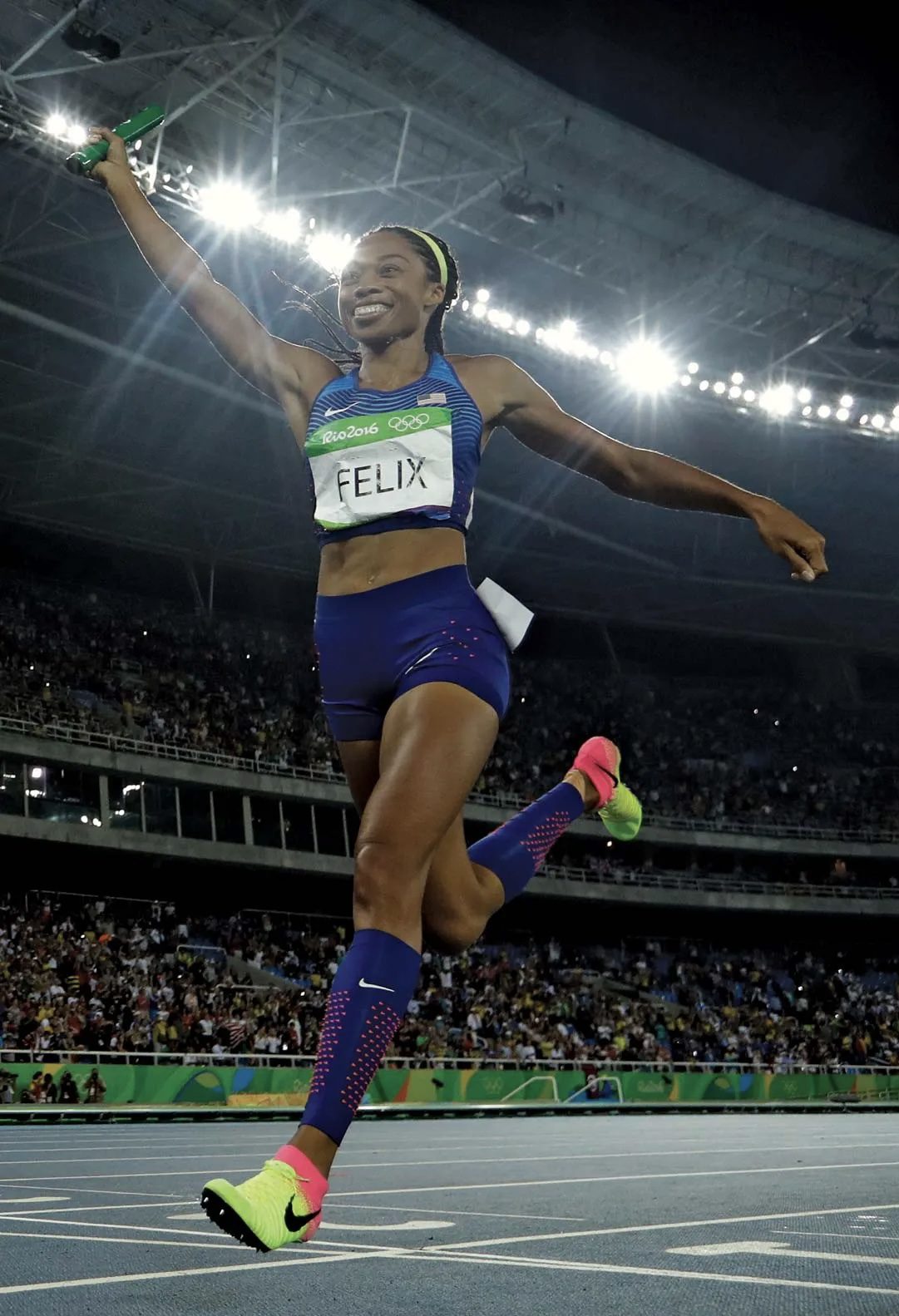
Felix continued to dazzle the world after London. At the 2016 Rio Olympics, she became the first female track and field athlete to win six Olympic gold medals and also set the record for the most Olympic medals by an American runner. At her final Olympics in Tokyo (2021), she added a bronze in the 400 meters and another gold in the 4×400-meter relay, proving that even after turning 35, she could remain at the pinnacle of the sport.
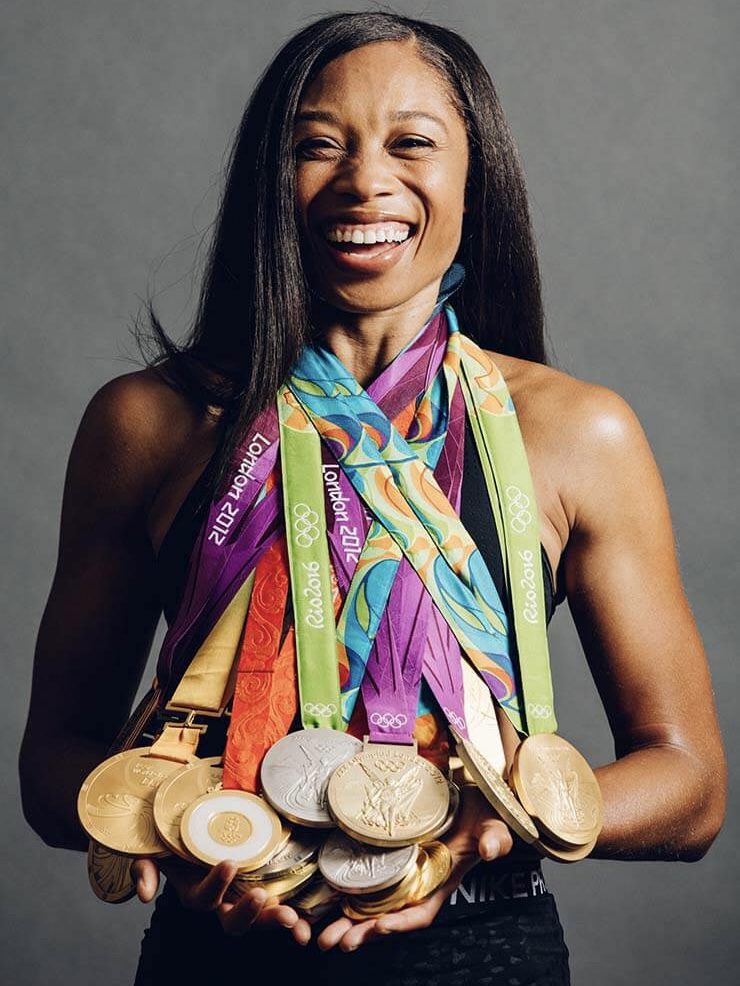
In total, Allyson Felix holds 11 Olympic medals (7 gold, 3 silver, 1 bronze)—more than any other female track and field athlete in U.S. history—and 18 World Championship medals (13 gold, 3 silver, 2 bronze), making her one of the most decorated athletes of all time.
Fighting for Women’s Rights
In 2019, Allyson Felix found herself at the center of a major controversy that extended far beyond the sports world. After giving birth to her daughter, Camryn, she was faced with a proposal from her longtime sponsor, Nike, to cut her contract by nearly 70%, citing her break from competition due to pregnancy. For many female athletes, such offers were standard practice; they feared losing their funding and remained silent. But Felix decided to act and break that silence.
In an op-ed for The New York Times, she spoke candidly about the pressure that athlete mothers face and the double standards in elite sports. Her words resonated widely in the media, among her teammates, and with the public. Felix’s stand sparked a domino effect, with other track and field stars joining the conversation. Public pressure forced Nike to revise its contract policies: the company announced it would no longer reduce payments to female athletes due to pregnancy or the postpartum period and formalized this in its agreements. This victory was not just a personal success for Felix but a crucial step forward for the entire sports industry.
After parting ways with Nike, she signed a contract with the brand Athleta, which offered not only financial backing but also a partnership in promoting social initiatives. Together, they launched programs to support athlete mothers, including providing funds for childcare during international competitions. Allyson became a symbol of female resilience and leadership off the track. She speaks at United Nations conferences and participates in campaigns for pay equity and access to sports for girls worldwide. Her example has proven that an athlete can be a champion, a mother, and an influential public figure who changes the rules of the game.

Personal Life
In 2018, Allyson Felix endured one of the most challenging periods of her life. At 32 weeks pregnant, she was diagnosed with severe pre-eclampsia, a dangerous condition that threatened both her and her baby. Doctors were forced to perform an emergency C-section to save both their lives. Her daughter, Camryn, was born prematurely, weighing just 3.7 pounds, and spent her first weeks in the neonatal intensive care unit (NICU). This experience fundamentally changed Felix’s perspective. She not only advocated for the rights of athlete mothers but also became an active participant in campaigns to raise awareness about the dangers of pre-eclampsia and the importance of timely medical care. In interviews, she often emphasized that her true victory wasn’t another gold medal, but the ability to hold her healthy daughter after they were both on the brink of life and death.

Her return to elite sports after such an ordeal was a testament to her phenomenal willpower. Just a year after giving birth, Felix won a gold medal in the mixed 4×400-meter relay at the 2019 World Championships in Doha, as well as a silver in the women’s 4×400 relay. These were her first medals as a mother, and they held special meaning for her.
In July 2022, after the World Championships in Eugene, Allyson Felix officially retired from her professional career. Felix leaves behind a legacy not only of records and medals but also of fighting for change within the sports industry. She proved that an athlete can be a champion, a mother, and an activist all at once. Her example inspires a new generation of girls and women to believe in their own strength, to face obstacles without fear, and to refuse to accept injustice.